Stop losing your top candidates. Here’s how to get them to sign on the dotted line.
Founders need to master hiring to scale. The right team fuels growth; poor hiring slows you down and drains momentum.
Filling roles is the easy part. The hard part is getting the best candidates to say yes, and then keeping them. A low conversion rate means you’re losing great people somewhere in the process.
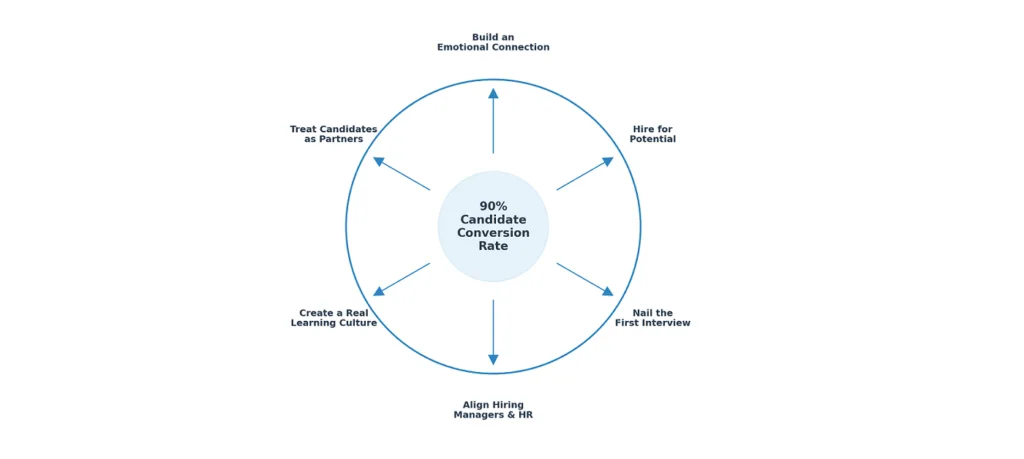
Want to achieve a 90%+ candidate conversion rate? You need to understand what motivates top candidates and build a hiring strategy that wins them over.
Here’s what I’ve learned from working with some of Central Europe’s top software companies.
1. Hire for potential
Top candidates aren’t looking for a job. They’re looking for a place where they can grow. If you don’t give them that, they’ll find it somewhere else.
Instead of only evaluating current skills, focus on what a candidate could achieve in six months. Make it clear how they’ll grow in the role and offer competitive compensation from the start, instead of depending on future raises to keep them engaged.

If you don’t set clear expectations and support their development, they’ll realize their value fast and leave within six months for a better opportunity. That’s a loss you can’t afford.
Learn how to build a career framework and compensation model that attracts, grows, and retains high quality candidates.
2. Build an emotional connection
Where to work is a major life decision, and people make those with emotions as much as with logic.
If your interview process is just a mechanical checklist of questions, you’re doing it wrong.

Instead, create a narrative that helps candidates see themselves thriving in your team. Start with their strengths, focus the discussion on what excites them, and highlight how their skills and experiences align with your needs. Avoid jumping between topics randomly, it makes your environment seem chaotic.
A structured yet engaging conversation builds trust and makes them want to say yes.
3. Treat candidates as partners
Trying to be the smartest person in the room only serves your ego. Your goal is a win-win scenario where both sides benefit.
42% of candidates decline a job offer because of a bad interview experience, one that felt like a power struggle. Instead of grilling candidates with impossible questions, focus on how you can create mutual value. Find out what they need to feel valued and what they want from the role. If they’re unsure, ask what they don’t want to experience anymore, then show them how your company is different.
Approach the interview as the start of a long-term partnership rather than a one-off hiring transaction. That alone gives you a competitive edge.
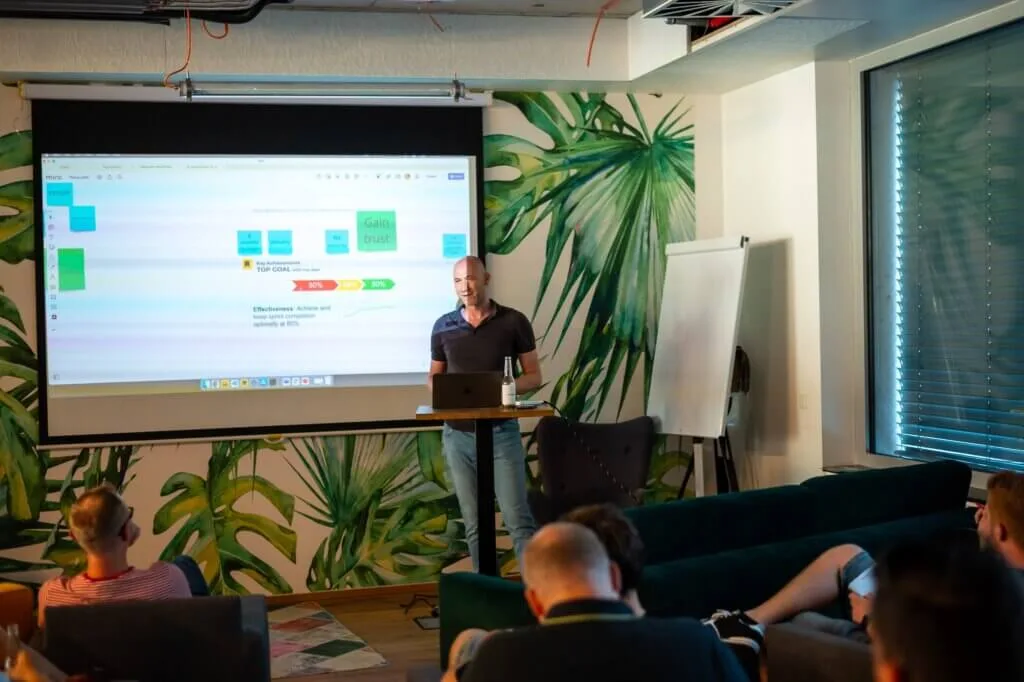
 Photo from our 22nd Engineering Leaders Community meetup
4. Create a real learning culture
A few online courses won’t do the trick. Top engineers are always sharpening their skills, and they’ll judge your company on how well it supports that.
Make your learning culture visible:
- Show how your internal communities of practice work.
- Highlight conferences, hackathons, and speaking opportunities you support.
- Explain your career development framework.
- Show your engineers’ visibility through blogs, meetups, and podcasts.
- Walk them through your onboarding process and how you support a smooth learning curve.
If learning isn’t a clear part of your culture, top talent will look elsewhere. Here are my best practices for creating a strong learning and growth culture in your company.
5. Align hiring managers & HR
A common problem: HR thinks they’re sending great candidates, but hiring managers find them unfit for the job.
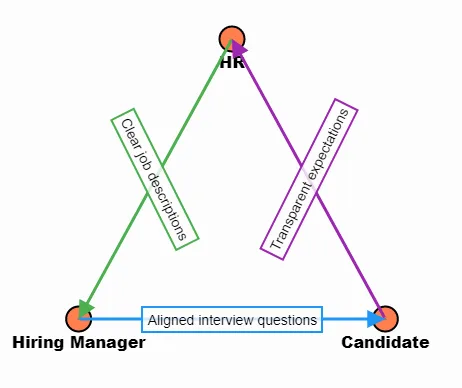
At Mews (now a unicorn), we built one new team per month in 2022. That kind of hiring velocity required a highly efficient recruitment process, but we kept running into one issue: HR was screening candidates based on a generic job description, without fully understanding what we needed.
The fix?
- Blacklist certain profiles early. If you need a front-end dev with TypeScript experience, filtering out Java-heavy resumes saves time.
- Create clear evaluation guidelines. Align on how to assess technical ability, culture fit, and growth mindset.
- Constant feedback loop. HR should refine job descriptions based on real candidate trends. If you’re asking for a unicorn that only Google could hire, it’s time to adjust expectations.
Once HR and hiring managers align, the whole pipeline speeds up.
6. Nail the first interview
A well-planned first interview can make or break your hiring success.
Here’s the structure I recommend:

Phase 1: Introduction & culture
This is your chance to sell the role and show off your differentiators. Instead of reciting generic company values, cover what candidates care about:
- Your company’s growth and potential
- The product vision
- Opportunities for career and personal growth
- Autonomy and decision-making power
- Team diversity and different perspectives
- Transparency in leadership
Pro Tip: Don’t sugar-coat the job. Transparency prevents nasty surprises later and reduces early attrition. You don’t want employees leaving during their probation because you weren’t upfront.
Next, shift to your questions. Skip the traditional ones like “What have you been doing for the last 10 years?” (which you can already see on their CV), and instead, ask questions that highlight their ability to balance technical and business aspects.
For example:
- “What’s your biggest achievement so far?”
- “How did you contribute to your previous company?”
- “What initiatives or successes can you share?”
You’re trying to identify what sets this person apart as a top candidate. Look for answers that show how they’ve driven revenue, improved efficiency, or built and led teams.
Red flag: If a candidate only talks about being a “medior” or “senior” without specific achievements, they might not be the impact player you need.
Phase 2: Technical discussion
Let a technical expert take over this part of the interview stage. They should ask detailed questions about how the candidate handled complex projects and code. It’s important to craft a story that ties their experience together.
Best practices: Encourage the technical expert to support the candidate rather than put them on the spot. They should offer hints or guidance when needed and avoid long, uncomfortable pauses. The goal is to make the candidate feel positive about the experience, not stressed out.
Phase 3: Summary & next steps
Instead of just asking, “Do you have any questions?”, frame it as: “Do you still see a win-win fit?” Address concerns proactively and reinforce why they should be excited to join.
Phase 4: Post-interview follow-up
67% of job seekers have been ghosted by an employer after an interview. Don’t be one of those companies. Stay in touch with quality candidates by:
- Sending a follow-up email or Slack message with additional resources (e.g., relevant tech events, blogs, podcasts, and your Glassdoor reviews, career framework, product rating, and roadmap).
- Personalizing the follow-up. Thank them for their time and reinforce the connection you built.
If you want to scale hiring efficiently, you also need clear documentation, the right job descriptions, and enough recruiters (one person can manage 2 to 3 hires per month).
In a nutshell, hiring deserves the same structure you’d give any engineering process.
Hiring a software engineering manager? 10 interview questions to help you make the right bet.
Final thoughts
As a founder, mastering hiring is one of the most valuable skills you can develop. If you want to hire the best applicants, you need to be the best at hiring.
Try these six strategies out and let me know the results. More to come in the follow-up post, where I’ll cover final interview rounds, closing the deal, and onboarding. 🙂