“Who here is Adam?” I asked a room of FIT ČVUT students on 5 November. Adam is one year before his master’s, has good grades, and his plan is to finish school and then look for a job. The average job got 244 applications in 2025, double what it got in 2022, and new-grad hiring at Big Tech is down more than 50% since 2019. Adam’s plan is a lottery ticket.
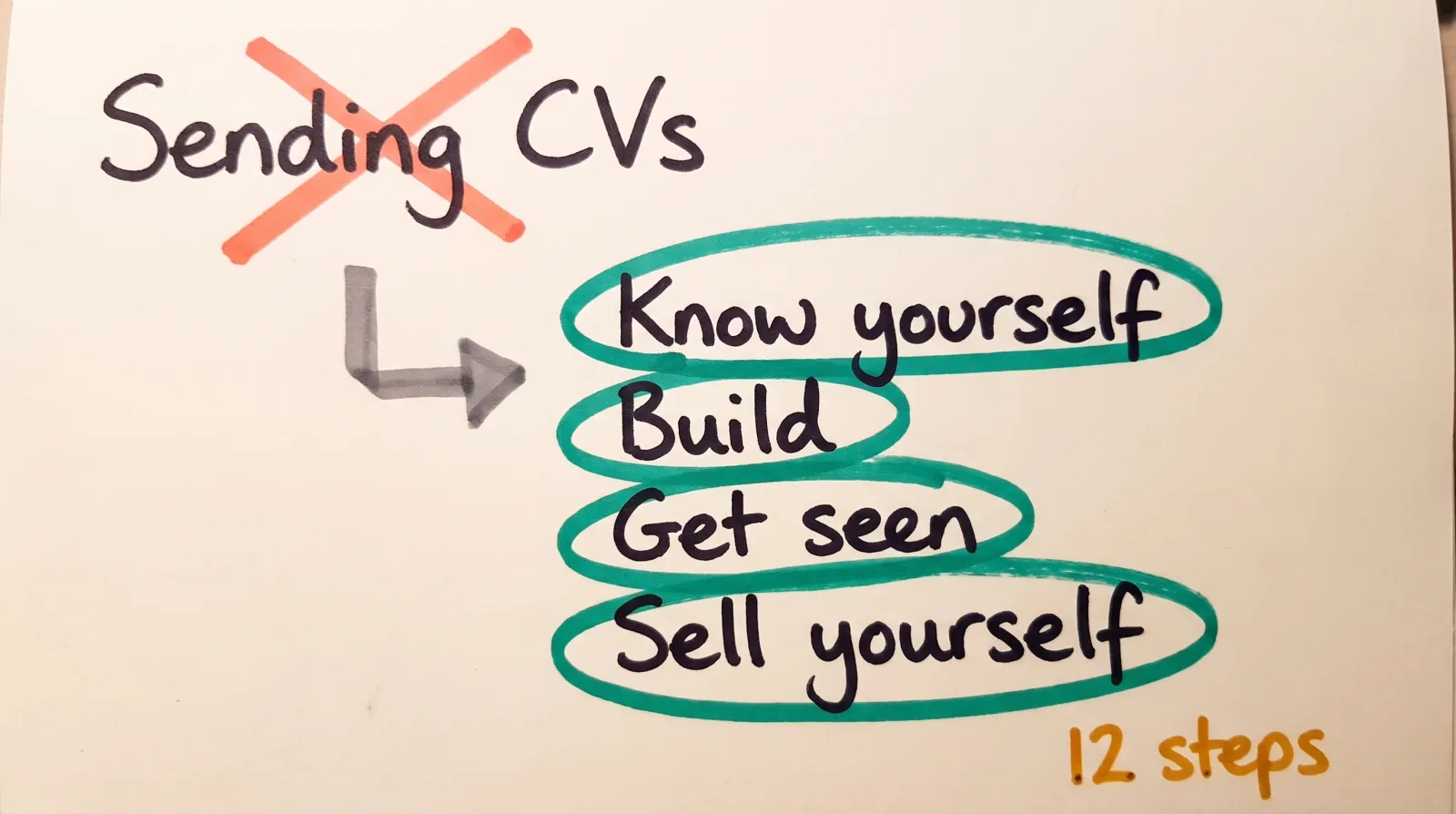
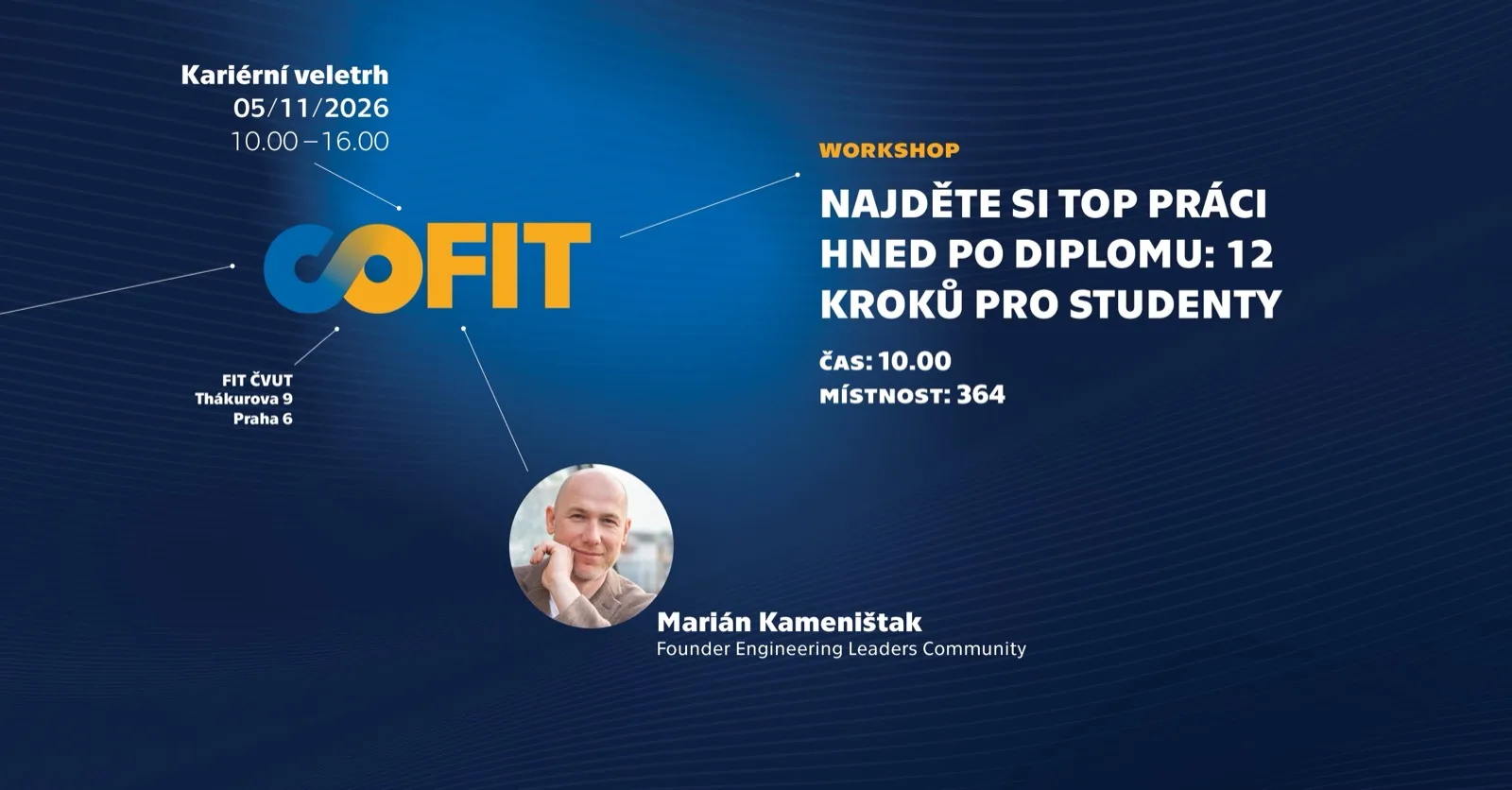
The workshop was at COFIT, the career fair of the Faculty of Information Technology at ČVUT in Prague, room 364, 10:00. The title was “Land a top job right after your diploma: 12 steps for students”. I run the Engineering Leaders Community, 3,640 engineering leaders across Central Europe, and I was VP of Engineering at Mews before that, so I have sat on the hiring side of this for 15 years. My advice to Adam was simple: stop sending CVs.
Adam is made up, by the way. I built him from the students I meet, and I say so at the end of every talk. The numbers around him are real.
The junior door is closing, and it isn’t your fault
Adam reads that AI now solves open maths problems and asks what is left for a junior. The answer is in the hiring data, not in the maths. New grads were 7% of Big Tech hires in 2025, and the net growth in software postings went 71% to senior roles.
| What moved | Number | Source |
|---|---|---|
| New grads’ share of Big Tech hires, 2025 | 7%, down more than 50% from 2019 | SignalFire |
| Employment of 22 to 25 year olds in AI-exposed jobs | down 13% relative to older workers | Stanford SIEPR |
| Software postings vs February 2020 | 27.5% below | Indeed Hiring Lab |
| Larger Czech tech firms that did not grow dev teams in 2025 | 9 in 10 | Lupa.cz |
| Tech layoffs tracked by Layoffs.fyi | 122,606 in 2025, 139,004 so far in 2026 | Computerworld |
Mews is the company Adam dreams about. I helped grow it from 8 to 80 teams, and this week Lupa.cz has it cutting around 15% of its 1,350 people, with Czech firms in general not replacing the juniors who leave.
Mews stopped hiring juniors. I know that from my own conversations there, not from the press. I expect the layoffs to continue through 2027; that is my view, not anyone’s forecast.
So the laid-off senior with 8 years of experience is now applying for the same roles as Adam. Adam does not compete only with his classmates any more.
The counter-argument from the same Lupa.cz piece is that companies understand juniors will run out and will have to hire them again. True, and useless for Adam. The shortage lands around 2029. Adam needs a job in June 2027.
A CV in a pile of 244 is a lottery ticket
Adam sends 40 CVs through job boards and gets 0 replies. The companies got hundreds of AI-written CVs for each role, and “tailor your CV to the job description” stopped being a differentiator the day everyone’s CV got tailored by the same model.
An interview that starts with a referral is 35% more likely to end in an offer, in Glassdoor’s data reported by CNBC in January. Cold applications still produce most offers, 60% in the same data, down from 73% in 2023. That 60% goes to people with a track record; a junior with none sits at the bottom of the pile.
I see it from the other side every month. By our own count, partner companies hire 2.7 engineering leaders a month from people they met at an ELC meetup, on a boat or in a mentoring session. The CV arrives after the handshake, as a formality. I wrote it two years ago for leaders and it holds for students: you need the right 10 people who will vouch for you, not 100 applications.
A CV in a pile of 244 is a lottery ticket. A person who vouches for you is a key.
| Route to the first job | What it costs Adam | Who sees him | Odds | Source |
|---|---|---|---|---|
| 40 CVs on job boards | 40 evenings | A screening tool, maybe a recruiter | 1 of 244 per role | Greenhouse via RecTech |
| A referral from someone he knows | 12 coffees over a year | The hiring manager, before the role is posted | About 18% of all hires, from a pool far smaller than 244 | Ashby, ~250,000 hires |
| 2 months of work for a founder he met | 2 months unpaid | The person who signs the offer, every day | No public data | this route has no survey; the manager watches you work |
So here is what Adam did with his last year. Twelve steps, in four blocks, none of them a CV.
Know yourself: domain, differentiator, portfolio (steps 1 to 3)
1. Pick a domain outside IT
Adam finds out he likes money and numbers, so he picks fintech. Almost anyone can write code with AI. Few people understand the business, and that is where a junior can still be rare. Finance, health, logistics, community, agriculture, whatever you already know from the inside.
2. Find your differentiator
Adam grew up in his mom’s accounting office, so he understands accounting from the inside, and almost nobody in his year does. What do you know that nobody else in your year knows? Hobbies, family business, the job you did during school, the town you come from. NACE found that fewer than 40% of employers screen candidates by GPA and nearly two thirds hire on skills, so the thing nobody else has beats the grade everybody has.
3. Think in skills, not jobs
Adam stops thinking “I will be a Java developer” and starts thinking “code plus accounting plus I can explain it to people”. You are a portfolio of skills, not an employee. One role is one risk; a portfolio is more doors when one closes. Write your own three on one line and say it to the person next to you; if they can’t repeat it back, it isn’t a portfolio yet.
Build what someone uses (steps 4 and 5)
4. Build a pet project with real users
Adam builds an app that tracks spending, posts it in his year’s group chat, and 30 classmates use it. A project 30 people use says more than a grade, and the first 30 users are the people who already have your phone number.
The part I like most about this step is the VAT rounding. AI writes Adam’s rounding code, it’s wrong by a cent on every tenth invoice, and Adam spots it because he grew up next to an accountant. Knowing when the AI output is wrong, and why, is the skill that stays.
5. Start a small business of your own
Adam automates invoice matching for his mom’s office, for money. Your first paying customer teaches you more than a semester: how to sell, how to deliver, and how to hear “this does not work” without arguing. The rule for money: charge for a product you own; give your time away only to buy access to a person who signs offers (step 12). If you want a gate for the idea before you build it, I wrote down how I validate a business idea with 25 checks; a student needs maybe 5 of them.
Get seen: footprint, coffees, meetups, a talk (steps 6 to 9)
6. Fix your digital footprint
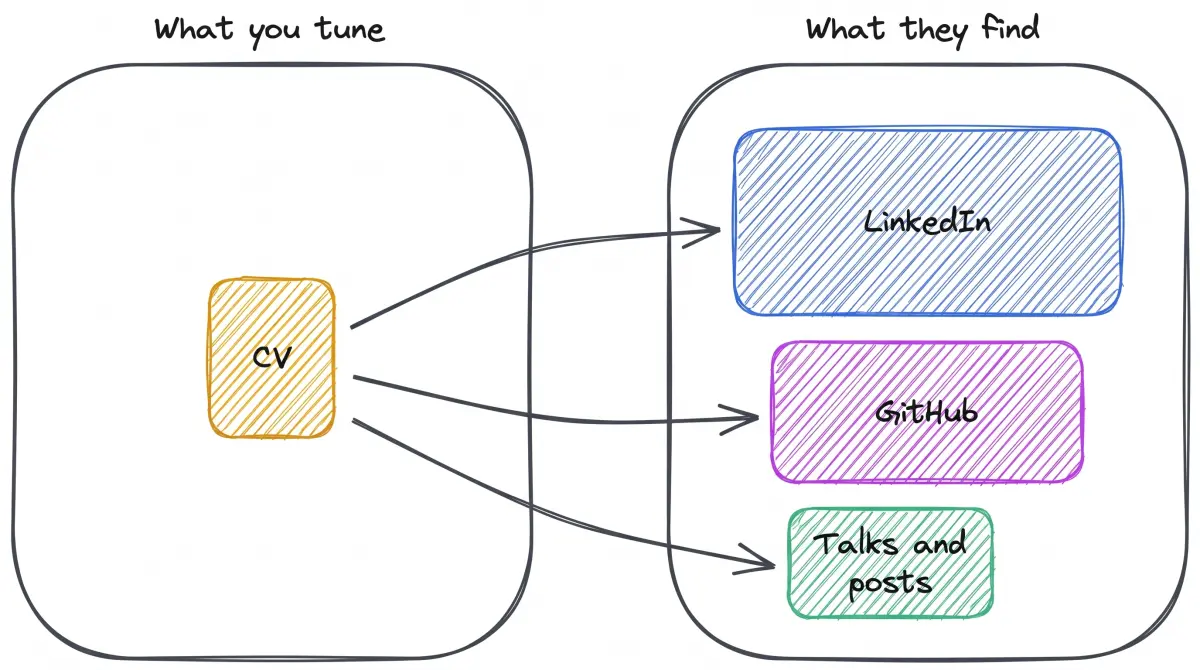
Adam puts the project on GitHub with a README, posts about it on LinkedIn, and builds a one-page personal site. Google yourself on your phone right now and look at what comes up first. If the answer is a 2019 Facebook photo, that is what the hiring manager sees too. A digital footprint check takes ten minutes by hand.
7. One coffee a month
Every month Adam has coffee with one person from the industry. He asks for 20 minutes and one question, never for a job. Twelve coffees in a year is twelve people who know his name when a role opens on their team.
8. Go to meetups with a quota
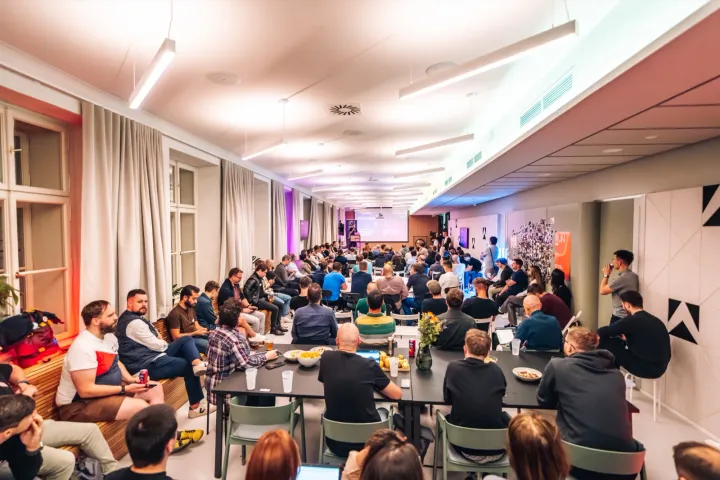
Adam came to COFIT. Then to an ELC meetup, then to the next one. The goal for every event is 3 new contacts and 1 follow-up within 24 hours. ELC runs 12 meetups a year with a median of 125 registrations each. The ELC Conference in Prague on 22 April 2027 takes student helpers; it is the cheapest way I know to spend a day next to 500 engineering leaders.
9. Speak before you are invited
Adam writes to the organiser of the next student meetup and asks for 10 minutes to show his app. Do not wait to be invited, sign up yourself. I run 12 meetups a year and I am short of speakers far more often than I am short of seats; most organisers will say yes to a student who has built something. Few people in the room expect a student to be good; being clear is enough.
Sell yourself: pitch, money, internship (steps 10 to 12)
10. Write the 30-second pitch
“I’m Adam. I build tools for accountants. My automation saves my mom’s office 6 hours a week. I’m looking for a fintech where I can do this at scale.” Who you are, what you can do, what you are looking for.
In the room I gave them one minute to write it down, and two volunteers said theirs out loud.
11. Talk money and impact, not outputs
Adam does not say “I wrote a Python script”. He says “I saved the office 6 hours a week”. Hiring managers hear outputs all day; the junior who talks in hours saved and invoices matched sounds like someone who has already worked. When the offer comes, the junior bands in Europe tell you what the number should be.
12. Take the internship, even unpaid
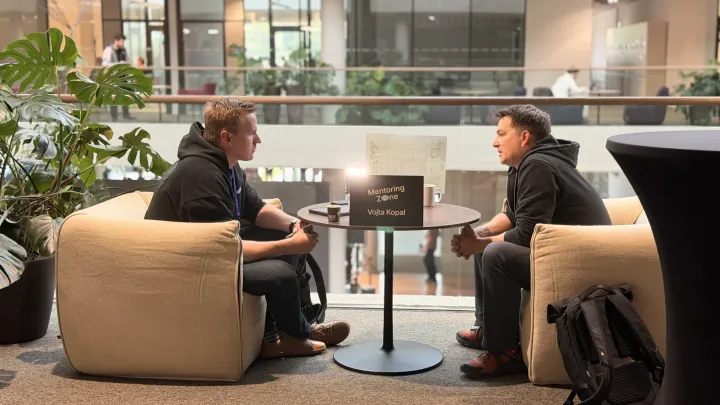
Adam meets a fintech founder at a meetup and offers 2 months of work for free. I still work for free sometimes, because it buys access to people, and access is what a junior lacks most. Two unpaid months next to the person who signs offers beat a year of rejected applications.
What ELC does with FIT ČVUT and VŠE
This workshop was the first thing the Engineering Leaders Community and FIT ČVUT do together, with thanks to Khrystyna Verbytska and Jakub Novák at the faculty for making it happen. We already work with VŠE the same way. Next come an ELC meetup at the faculty, free mentoring sessions for students, and student helper seats at the conference. If you teach at a university in Central Europe and want this workshop in your room, invite me.
June 2027: Adam has an offer and sent zero CVs
Adam defends his thesis in June 2027 with a job offer in his pocket, from the startup where he did the internship. He did not send a single CV. He is made up, but each of the twelve steps is something you can start this week, without a diploma.
My personal advice on top of the twelve steps is to choose your close circle on purpose: who you meet, who you drink with, and what you read, for work and for fun. Beer is fine; who you drink it with matters.
Pick two of the twelve steps and start this week. Before you close this page, write down the first three people you will have coffee with.
[Writing time: 6h]