
Engineering leaders deciding whether they are on the right path

Career Path Decision. The wrong path doesn't announce itself. It just quietly costs you money for years.

Wrong role, wrong company, wrong level, wrong moment to move. None of it feels like a crisis. You're busy, you're paid, you're fine. And every year spent on the wrong path is a year your ceiling, your title and your market value grow slower than they should.

The arithmetic is worse than it looks because it compounds: a wrong-path year resets the base that every future raise and offer is calculated from. So we work out honestly whether you're on the right path, and if you aren't, what the highest-value move is. Then the tactical calls that follow it: the raise, the next role, the senior loop, the manager. 3,400+ sessions since 2019. I built engineering at Mews through Series C and led it at Manta before IBM bought them.

9.2/10 from 300 mentees who rated the work.

Five situations that start a career conversation

These are composites, built from real sessions with identifying detail removed and replaced. What happened is true; who it happened to has been changed.

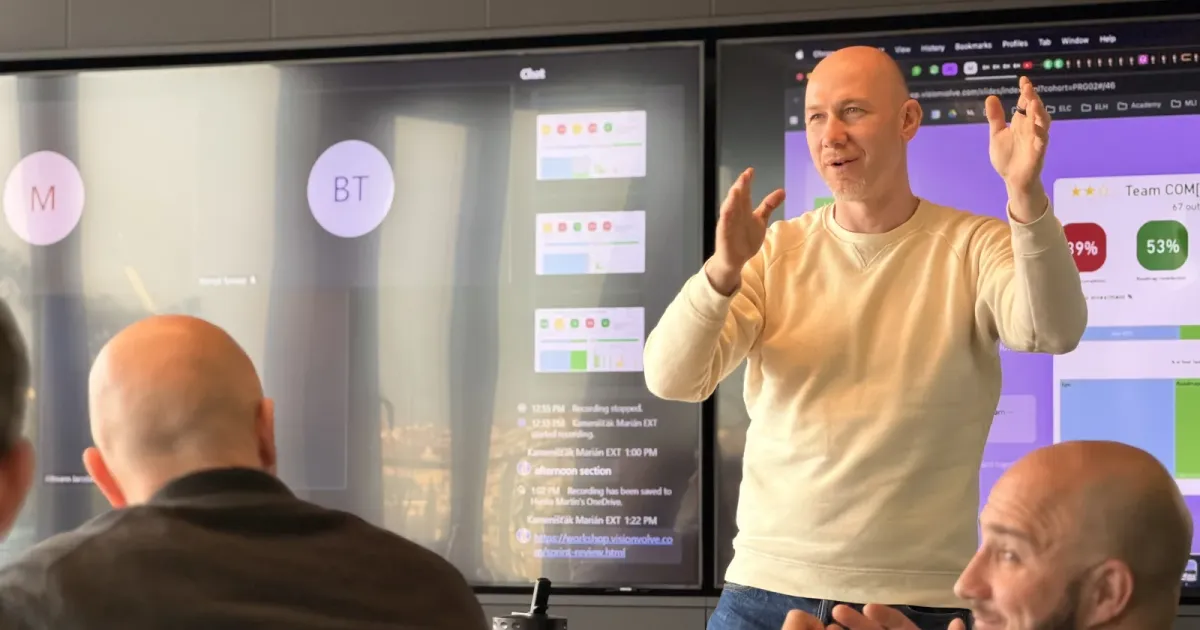
Marian Kamenistak in a 1:1 mentoring session.

Nothing is wrong, which is the problem

Nothing's on fire. The job is fine, the pay is fine, the team is fine. And you have a nagging sense that you're optimising a path you never really chose: wrong role, wrong company stage, or a level you quietly got stuck at three years ago. You keep not deciding, because deciding feels dramatic and staying feels safe.

Staying isn't safe. It's slow, and slow doesn't trigger anything in you the way a crisis would. That's the entire reason this situation survives in capable people for years at a time.

The arithmetic most people never run: A year on the wrong path isn't a flat loss of one year. Your next raise is calculated from your current base, and so is the one after that, and so is the offer somebody makes you in four years. A wrong-path year resets the number that every future increase compounds from. Three of them isn't three years behind, it's a permanently lower curve.

So we run the diagnostic properly, and separately: right role, right company size, right level, right moment to move. People usually have one of those four wrong and assume all four are. Then we put a real number on what your current path costs over three years, which is generally the point at which the decision stops feeling dramatic and starts feeling overdue.

You leave with a verdict, that number in writing, and one decision made rather than deferred again. Sometimes the verdict is stay, and that counts as a result: it kills the background hum that's been quietly eating your attention for a year.
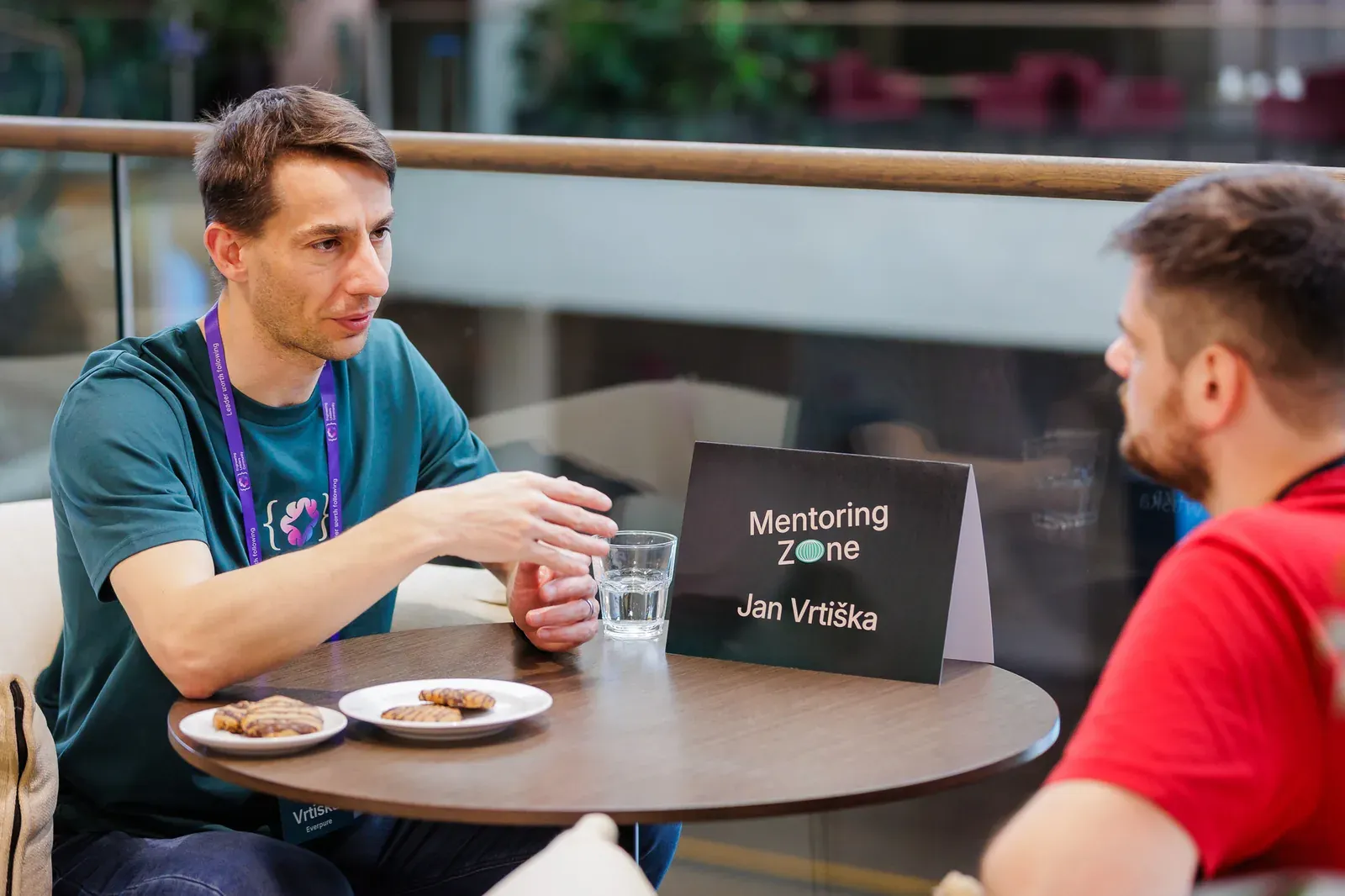

Marian Kamenistak in a 1:1 mentoring session.

You're underpaid, you know it, and the conversation keeps going badly

The market for your role sits 30 to 40% above what you're on. HR says budgets are tight. Your manager says next cycle. You'd take a partial fix at this point, and every time you open the negotiation doc you close it again, because you don't have a number you could defend if somebody pushed back on it.

It goes badly because you're arguing from fairness and the person opposite you is working from budget. Those are two different conversations and only one of them has a lever in it.

We build the packet: comp data from real offers rather than aggregate sites, your impact log for the last twelve months, and a specific number with a floor underneath it. Then we rehearse the conversation, and agree in advance what you do if the answer is still no by a date you choose, so that a no doesn't leave you improvising in the room. Four weeks to the conversation delivered. If the money is the whole reason you're reading this, the deeper version of that work has its own page.

Marian Kamenistak in a 1:1 mentoring session.

You want out and you can't afford a gap

Mortgage, family, reputation. The current job is a stable six out of ten. Interviewing is a second job stacked on top of the one you're already behind on. Your CV hasn't been touched in three years, and every recruiter DM feels like a coin flip you didn't ask to play.

Broad searches fail at your level for a mechanical reason rather than a motivational one. Senior roles get filled off a shortlist before the posting goes up, so volume applications arrive after the decision has effectively been made. Eight to fifteen well-chosen companies beats two hundred applications and costs you fewer evenings.

So we build the targeted sixty-day search: which companies genuinely fit, which relationships to warm first, and what your story has to look like for those particular seats. Then interview rehearsal, then the negotiation when an offer lands. Sixty days out you should be holding three to five real conversations and something live to negotiate against.

Marian Kamenistak in a 1:1 mentoring session.

You have a senior loop in three weeks and you haven't interviewed since 2019

Head of Engineering at a Series B. Or VPE at a scale-up, or a fractional gig with a portco. These loops look nothing like the interviews you last sat, and the walk me through a hard decision question is going to find you out, because you haven't had to frame your own decisions as a narrative in years.

That question is the interview, incidentally. Most of the rest is formality with a scorecard attached. What they're testing is whether you can hold a decision that went badly without either defending it or falling apart about it, because that's what they'll need from you in month four.

So we do dry runs and I play the people you'll face: the CEO who wants to see confidence, the board member who wants numbers, the CTO peer working out whether you're technical enough to be worth arguing with. We write narratives for five stories and rehearse them aloud until they stop sounding rehearsed, which takes longer than anybody expects and is the whole point of doing it.

Before the loop: three dry runs behind you, five stories written, and one hard-decision walk-through you own rather than survive.

Marian Kamenistak in a 1:1 mentoring session.

Your manager is the problem and HR is not coming to help

They micromanage, or they ghost, or they take the credit, or they contradict you in the meeting where it costs most. Every 1:1 makes it fractionally worse. Skip-level is complicated for reasons you could explain for ten minutes. And you've been half-looking externally for four months without committing to either thing.

The half-looking is the real damage. It costs you the whole emotional load of leaving with none of the benefit, and left alone it can run for years.

So we turn it into a decision with a date attached. First we name the pattern, because control, avoidance, credit-taking and undermining want different responses and people routinely misdiagnose which one they're standing in. Then a sixty-day attempt to fix it from inside: one specific behaviour, one specific ask, and escalation criteria you set now, while you're calm, rather than in the week you finally snap. If nothing has moved by day sixty, we run the exit properly, on your timing, relationship civil and reputation intact.

Day 60 you have either measurable change or an offer. What you no longer have is another four months of half-looking.

The questions I hear most from Engineering leaders deciding whether they are on the right path

These are the exact asks from mentees in the last 12 months. Bring one to the intro call and we start there.

How mentoring with me works

Free 30-min intro. Two KPIs to move in 3-6 months. Small homework after every session. The full method, step by step:

See how mentoring works →

Frequently asked

What if my real block is that I'm not sure what I want?+
That's one of the most common places people start, and it's a workable one. The first artefact we build is what you want, written down, in your words rather than the version that sounds respectable on LinkedIn. Everything else gets easier once that exists.
Will you tell me straight if I should just quit?+
Yes. If get out is the honest read, you'll hear it from me and then we'll design the exit properly rather than the dramatic version. Often the fix is smaller than leaving. Sometimes it isn't, and pretending otherwise would just cost you another year.

Can we talk about salary numbers directly?+
Yes. I keep comp data for eng-leadership roles across the CEE, UK, EU and US markets. We look at what your level is being paid this year, and what a defensible ask looks like against it.

Are you the right coach if I want to leave engineering entirely?+
If you're leaving eng-leadership for something completely outside the field, probably not, and I'd say so on the intro call rather than take your money. If you're moving Big Tech to scale-up, or FinTech to HealthTech, yes. I know that market across CEE and North America well enough to be useful about it.

Explore other roles

Why me

Marian Kamenistak, mentor for Engineering leaders

9.17/10 average across 300+ mentees. 3,400+ mentoring sessions since 2019.

  • Been in the seat. Built Mews into a $2bn+ unicorn: 8 to 80 teams, roadmap still shipping. Led engineering at Manta before that, acquired by IBM.
  • CEE-native, US-fluent. 4+ years in the Bay Area as Principal Software Architect at Databricks.
  • Still highly technical. AI freak. Bullshit me on estimate, effort, code quality or architecture and I'll ask to see the code or your AI skill set.
  • Financially independent. I don't need your money. I'm financially retired. Seeing you grow is my payoff.
  • Direct. Mentoring first. I boost you fast. No esoteric loops.
The full story →

The one discount

16 minutes. 16% off.

The First quarter lists at €2,580. Build the inquiry with my AI and the same six sessions come to €2,166 — €361 a session. No more than 16 minutes from the first question to a formal itemized offer in your inbox.

Ready to start?

Free 30-min intro. No pricing conversation on the first call. We figure out if we can move your specific problem forward. That is it.

From the blog

All posts →