 Engineering managers juggle a lot: team dynamics, business alignment, and driving improvement, all at the same time. These challenges are too complex to tackle alone. A community of practice makes the difference.
A community of practice brings engineering leaders together to exchange ideas, share experiences, and grow, outside the reporting hierarchy.
In practice it runs on collaboration and experimentation between the managers themselves, so there’s no rigid process to roll out and no directive coming from the top.
Here’s how to build one that works.
Purpose: three pillars
Communities of practice stand on three pillars: helping collaboration, fuelling growth, and leading with consistency.
- A platform for peer learning, where members share knowledge and grow together.
- A source of inspiration, offering success strategies and best practices.
- A safe space for asking questions and sharing tips.
- A framework for alignment on performance ratings, promotions, and hiring practices, so managers decide these the same way.
- And a communication channel for topics like promotion planning and performance review updates.
Who it’s for
Every engineer has the potential to lead. Here, we help each other take the next step.
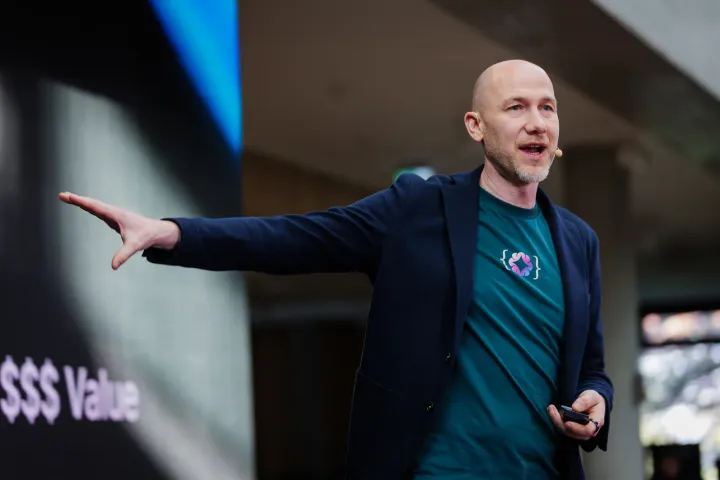
The community is for everyone in engineering leadership: managers, directors, and those preparing to step into leadership roles. Wherever you are on your journey, it’s a space to learn, share, and connect with peers.
Principles
Each community thrives on shared values:
- Respect: every voice matters. Ideas are shared openly, received with care.
- Experimentation: members are encouraged to try new approaches and share the learning.
- Growth: celebrate successes, learn from mistakes.
How it operates
Regular meetings
Bi-weekly meetings are the heart: structured sessions where members discuss topics, share insights, and ask questions.
- Collaborative agenda: participants suggest discussion points in advance.
- Facilitator role: ensures each meeting is impactful. Facilitators prep additional topics to guide conversations, especially in early stages when members need more direction.
What gets discussed: 6 categories
1. Ad-hoc topics: specific challenges, concerns, or gaps members bring in.
2. Learning and development: book summaries on engineering management, communication, collaboration, best practices.
3. Top-down communication
- Salary bands: explain methods and approaches when new salary ranges are available.
- Performance reviews: changes to the process, examples of effective goals.
- Promotions: consistency across managers when advancing team members.
4. Agility
- Experiment sharing: what teams tried, what worked, what didn’t (e.g., new retro formats).
- Metrics & KPIs: exchange useful metrics for daily EM tasks.
- Agile collaboration: work with the agile community on continuous-improvement experiments.
5. Recruitment and organisation
- Quarterly recruitment stats: funnel performance, successes, challenges.
- Team growth priorities: upcoming projects, hiring priorities, team shifts.
6. Best practices and incidents
- Incidents: key lessons to avoid repeating mistakes.
- Vertical slicing: creative ways to deliver customer value quickly.
Guest speakers from other departments (Talent, People, Community Management) round out perspectives.
Rules of engagement
Keep meetings efficient and outcome-driven:
- Topic introduction: the facilitator shares the agenda and invites the submitter to explain.
- Quick solutions: if the topic is simple or informational, resolve it during the meeting.
- Complex issues: assess priority as a group. If worth investigating, form a tiger team (topic submitter + 2-3 others) who work on it offline and present at the next meeting.
Communication channels
- Shared calendar for bi-weekly meetings.
- Dedicated Slack (or Teams) channel for async discussion between sessions.
- Asana / Jira / Trello for tracking tiger-team work and follow-ups.
- Shared Notion / Confluence space for meeting notes, book summaries, and pattern library.
What “success” looks like
Six months in, you’ll notice the change in a few places.
Managers start reaching for peers before they reach for you, which is the moment the senior EM stops being the bottleneck for every decision. Promotions run on the same rubric across the org, salary-band conversations sound the same in every team, and so does the feedback style. Lessons from one team’s incident land in the next team’s playbook instead of being relearned the hard way. And new managers ramp faster, because they join a working community on day one, as opposed to figuring everything out alone.
The tempo I recommend
- Month 1: define purpose, principles, cadence. Two or three “seed” topics ready.
- Month 2-3: facilitator prepares agendas actively. Members observe, learn the format.
- Month 4+: rotate facilitation. Members own the agenda. Facilitator becomes janitor.
- Month 6: first tiger-team output ships as a company-wide guideline.
Mission
The more we help raise first-time engineering managers in our territory, the faster our local companies match Berlin and London. A CoP is one of the highest-value moves in that direction. How about your company, do the managers meet like this, or does everyone still lead alone?