My own pipeline failed my AI-coach idea on all 4 of its first checks and scored it 2.5 out of 10. I built it anyway, on a 40-hour cap worth €8,000-9,600 of mentoring I’d give up (40 hours at my July session rate). The pipeline was right, and this post is about why I still run it.
This is how I use Claude Code to kill or launch a business idea. Validating one means proving demand, a paying buyer and a better use of your hours, with evidence, before you build. In my experience, new streams die in a Notion page by neglect. I want mine to die on evidence.
The hardest rule for that: a new stream must beat my best current one by 1.5x per founder-hour at the pessimistic case. A stream that’s profitable but mediocre gets killed.
Try it on your own idea
The whole pipeline is a free, MIT-licensed Claude Code skill: github.com/marian-kamenistak/founder-pipeline. Bring the idea you keep postponing, and the first step tells you what it can check and what it can’t.
claude plugin marketplace add marian-kamenistak/founder-pipeline
claude plugin install founder-pipeline@founder-pipeline
Then type /founder-pipeline:founder plus your idea in one sentence. Install options and tool setup are further down.
Ten experiments, three dead, two that pay
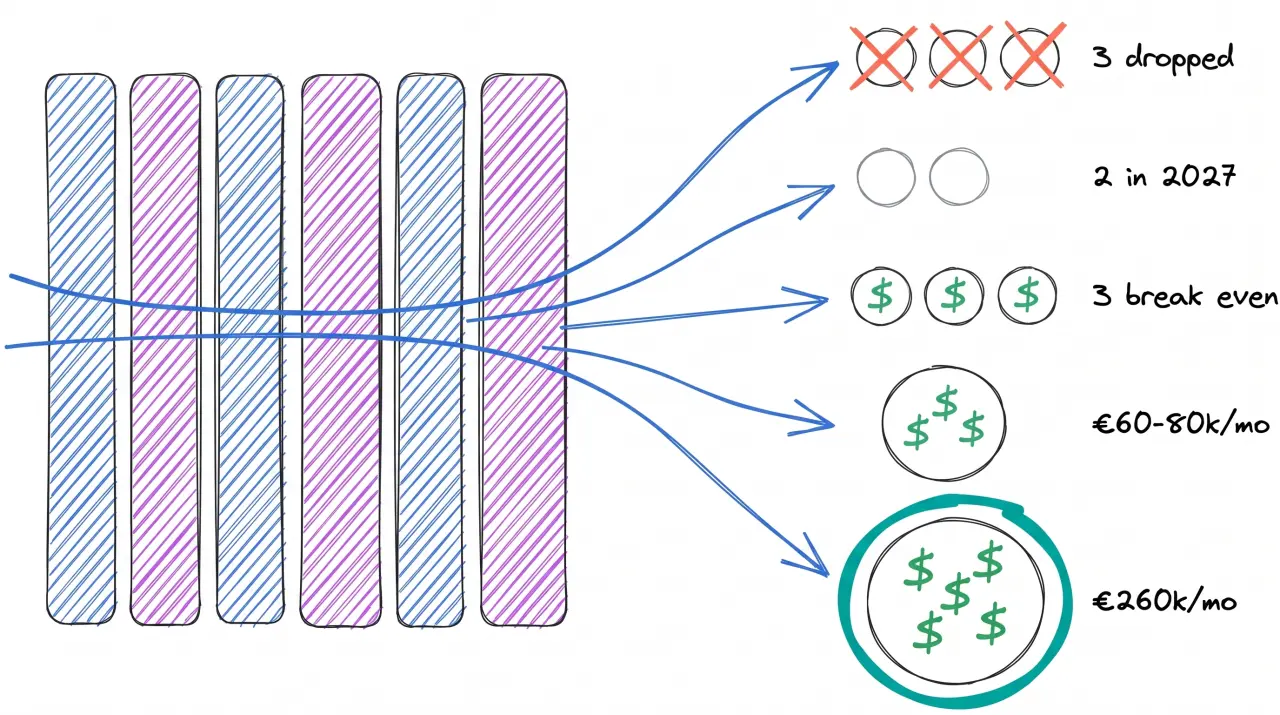
I’m a multipreneur. Over the years I’ve started ten experiments, and the scoreboard today looks like this:
| Experiments | Status | What they earn |
|---|---|---|
| 3 | Dropped, not worth continuing | Nothing, which was the point of dropping them |
| 2 | In build, going to market in early 2027 | Nothing yet |
| 3 | Running | Hopefully breaking even |
| 1 | Running | €60,000-80,000 a month |
| 1 | Running | €260,000 a month |
I built the first set of experiments on my own, by hand, one document and one gut feeling at a time. Two of them pay for everything else. Three should never have taken the months they took before I dropped them.
One of the three was Spreadmetrics, a sprint and team-efficiency metrics tool. The pipeline killed it at competitive research, before I’d written a line of code. That’s the cheap kind of kill: a few hours of reading instead of a quarter of building.
That’s why I spent two full months vibe coding the founder skill. I wanted the next ten ideas to go through the same gates in days instead of quarters, with the boring research done by agents and the decisions left to me.
How the whole run is orchestrated
The run has two speeds. The step sequence is serial: 25 steps, one at a time, each waiting for my signature. Inside a step, everything that can run in parallel does, through dynamic workflows.
One main loop on the top model
The main conversation runs on the strongest model I have (Fable 5.1 today) and acts as the orchestrator. It loads one stage file at a time, the step’s brief and at most one earlier artifact. Anything heavier than about 15 KB of prior work goes to a subagent, which reads on its own context and returns only its conclusion.
Dynamic workflows inside a step
When a step needs a wide sweep, the orchestrator writes a small workflow script and hands it to Claude Code’s workflow runner. The script fans out agents in parallel, sends each result straight to its own checking agent, and hands back one verified answer. It runs in the background while I do something else, and a re-run reuses every agent call that already finished, so a crash costs minutes instead of the whole sweep.
Gather wide, verify hard
A typical shape: 20 Haiku agents enrich 20 named accounts, each with one narrow question and a fixed output schema. As each one returns, a Fable skeptic tries to refute what it found, prompted to answer “refuted” when unsure. Before the phase is called done, one more agent asks only “what is missing?”, and whatever it finds becomes the next round of work.
Overnight, with no sends
For “kick it off, review it in the morning” I run the same pipeline in overnight mode. A fresh-context critic stands in for my sign-off, every step stays marked as awaiting my approval, nothing is sent to a person, and the run ends with a morning review file. My automation wrapper gives LLM jobs one slot at a time, a hard timeout, and a 02:30-06:30 window when the laptop is plugged in.
That split is where the performance comes from. Judgment stays serial and human, so no step builds on an unapproved guess. Research goes wide and cheap, and verification goes deep on the top model.
A plan with no evidence is fiction with a table of contents
The document is usually beautiful. Positioning, ICP, three pricing tiers, a competitor table, a launch checklist. Near the bottom sits a revenue projection with three scenarios, and even the pessimistic one looks pretty good.
Then nothing happens. Or the worse version happens: months of building an offer that had zero paid evidence behind it, because the plan said go.
Our planning tools are built to produce exactly that. Ask Notion AI or ChatGPT for a go-to-market plan and you get one in forty seconds: complete, confident, nicely formatted. The plan looks identical whether real demand exists or not.
The strongest counter-voice is the build-first camp. Pieter Levels puts it plainly on his own site: you need to validate with launching, a prototype in a month, then get the first dollar in.
I agree with the first dollar. A launch shows traffic and signups, though, not a price yes.
And in a quarter of Y Combinator’s Winter 2025 batch, 95% of the code was written by AI, so building is no longer the bottleneck. Selling is. Ask for the first dollar before you build anything.
The refusal is the product
The part of a planning process that does the work is the gate: the point where a step gets refused and sent back. Most tools have no such point. They generate, and generation almost never fails, so the plan grows a new section every time you feel doubt.
Doubt should shrink plans, not lengthen them.
This isn’t my taste against yours. Camuffo, Gambardella and colleagues ran four randomised controlled trials with 759 firms, teaching founders to treat the business idea as a hypothesis to test. The trained founders terminated more of their ideas, and their revenue grew faster than the control group’s.
Every step of my pipeline ends with the same four moves. Here is how they played out on the AI coach, on 2026-07-26.
Draft it
The step’s file gets written from evidence. Mine said which existing work would give up hours for the AI coach, and what profit would make it worth it.
An adversarial critic attacks it
A separate agent, with no memory of the drafting conversation, tries to refute the draft. It got only my portfolio trade and my profit bar, so it couldn’t inherit my enthusiasm.
Every criterion gets a verdict
Each pass/fail criterion is judged on its own, with evidence written next to it. Mine failed 4 of 4: the stream I offered to slow down had used 0 of its 30 hours, so it freed nothing. “I will delegate this” named no person and no number. Nothing in the plan could stop the stream, and its 90-day kill date fell before its own public launch.
I sign it off by hand, or I don’t
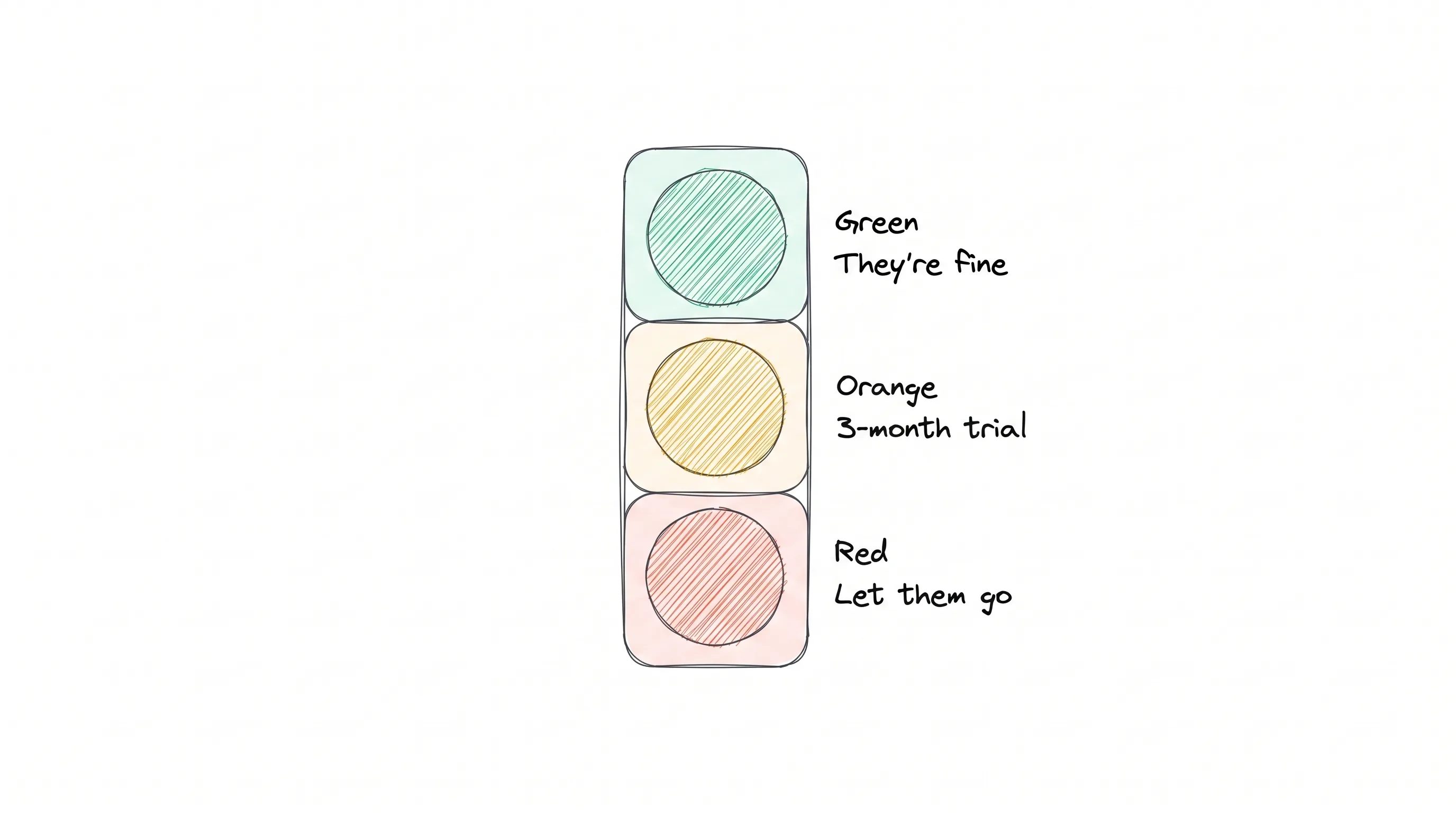
There is no auto-advance anywhere. A failed criterion leaves two exits: loop again with better evidence, or write an override. You don’t get to swap in a softer critic. I wrote the override.
The critic also prints a 0-10 score, and the score is deliberately advisory. Self-scores drift; the same facts can come back a 6 on one run and a 7 on the next. Binary criteria carry the gate, because pass/fail with evidence attached doesn’t drift the same way.
One more rule I’d recommend to anyone, tool or no tool: when a metric can’t be measured, the file prints not available and says why. A blank reads as nothing-there, a zero reads as a measurement, and neither one is true.
25 steps, 6 phases, three places it can kill you
Three points can kill the idea outright: no hours to give, no measurable demand, not enough profit per founder-hour. The first sits in step 1, the second in step 4, the third closes phase 2.
| Phase | Steps | What it decides | Can it kill the idea? |
|---|---|---|---|
| 1. Ideation | 7 | Problem, buyer, demand data, competitors, offer, name | Yes, twice: no hours to give (step 1), no measurable demand (step 4) |
| 2. Viability | 4 | Hours, money, price, the profit verdict | Yes: under 1.5x your best stream per hour (the profit verdict) |
| 3. Clients | 1 | First touches to 10-20 named buyers | No, but its replies can rewind earlier steps |
| 4. Build | 6 | Email, keywords, copy, website, competitor teardown, deck | No |
| 5. Activation | 4 | Posts, listings, links, prediction re-checks | No |
| 6. Adoption | 3 | Channels from real data, one north star, the 90-day plan | Only through its dated kill conditions |
The third gate is the hard one to accept. The new stream must beat my best current stream by 1.5x per founder-hour at the pessimistic case, as opposed to the case you pitch to yourself. It must also clear an absolute floor: the smallest 12-month profit that would make the focus worth it.
“Profitable but mediocre” is defined as a KILL. There is no “keep it small on the side” verdict on the list. Side streams stay small in revenue, but rarely in hours.
Two ordering choices do the rest. The name is decided at step seven, after the problem, the buyer, the demand data, the competitors and the offer. A name chosen first becomes something to defend; a name chosen seventh describes something that already survived six attacks.
And selling gets its own phase before anything is built. Only 1.74% of newly published pages reach Google’s top 10 within a year. Meanwhile referrals and direct outreach bring nearly two-thirds of new business for professional-services firms. So a landing page proves little in year one, and a yes from a real buyer proves demand now.
It said no to me twice, and I overrode it both times
The AI coach is the expensive kind of story. After the 4 of 4 failure I got four options: kill it, reclassify it as marketing, test the topic with a paid workshop first, or build it with eyes open. I chose the last one, and the file records it in one sentence:
I’m building this knowing it will probably not clear 1.5x the profit per founder-hour of my mentoring, because I want the capability.
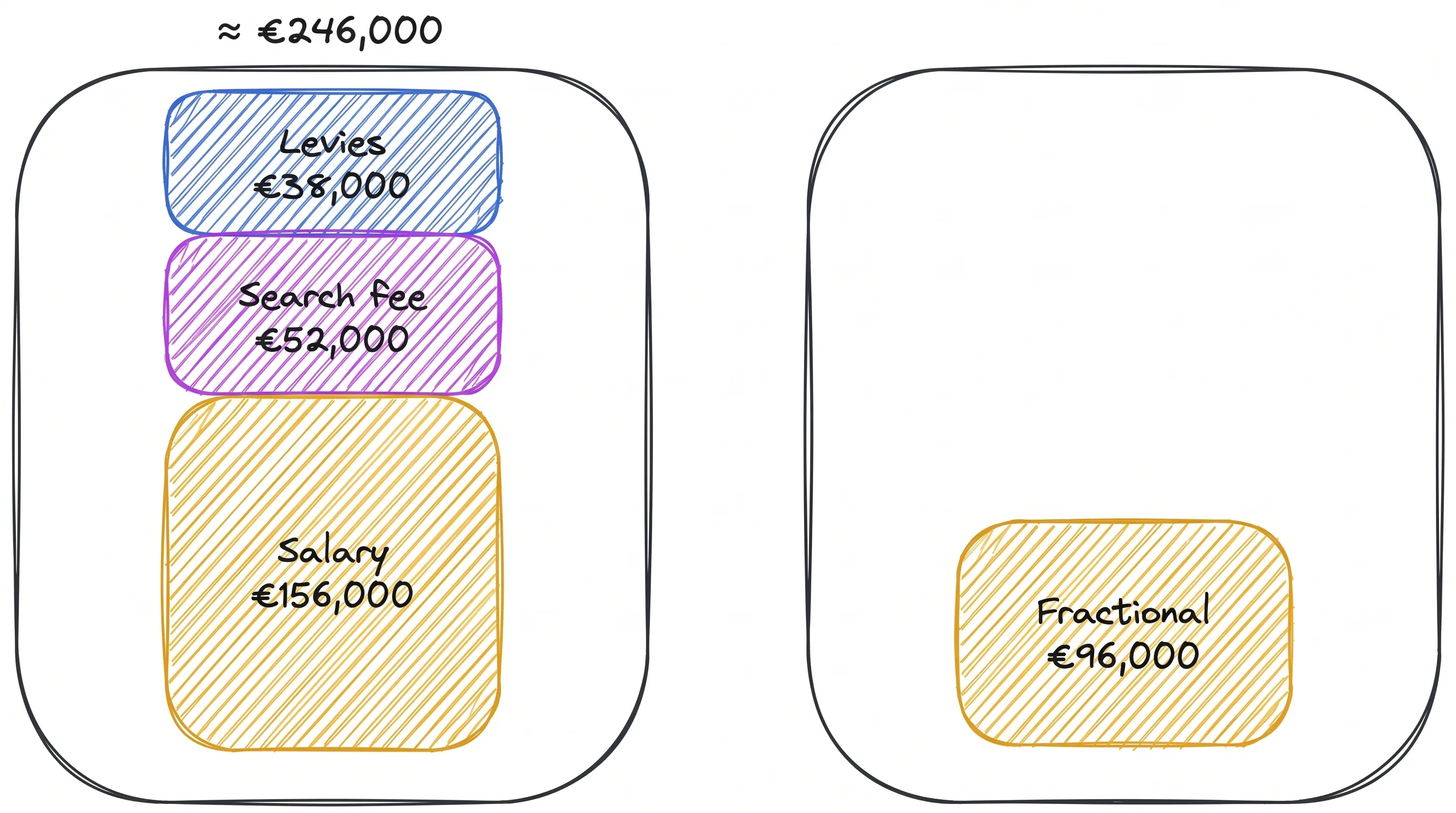
Then the pipeline made me price that: 40 hours of my time, €8,000-9,600 of mentoring I won’t do, with a stop-and-decide when the counter hits 40.
On 2026-07-26 I built the landing page and its copy before I’d worked out the money or asked a single buyer for a price. Phases 2 and 3 were still empty. I skipped the exact step this post argues for.
On 2026-08-16 the next checkpoint asked for 5 existing mentees to describe the problem unprompted. A critic scored my plan to skip it 3/10. I skipped it anyway and made the AI companion a free part of every mentoring pack, live since 2026-10-01.
Here is the honest score. In practice the AI coach ended up as option two, marketing: a free feature that makes the packs easier to sell. That was the gate’s verdict all along. Hours spent against the 40-hour cap: not available, because the counter in my progress file still reads 0/40, last touched on day one.
So the tool worked and I didn’t. Writing the override down did one useful thing: I can’t tell myself later it was a business case. The cap failed because it depended on me remembering to update it. If you override a gate, hand the counter to someone else or put it on a weekly calendar check.
The big picture, piece by piece
Six mechanisms every step shares, each taken straight from the skill’s own definition.
The per-step loop
Every step copies its template, drafts the file, runs the critic, judges each criterion PASS or FAIL with evidence, and waits for my signature. A fail loops. After 3 loops with no movement, the skill stops polishing and names the missing real-world evidence to go and get.
Two state files, never merged
brief.md holds the business state: the idea, the buyer, the bar, the stack. PROGRESS.md holds the pipeline state: one row per step with its status, critic score, def-of-success result and a one-line note. A crash can lose a conversation, never the pipeline position.
One owner per artifact
Every recurring artifact has exactly one owning step. Competitors live in step 5, named accounts in step 3, the outreach message in phase 3. Later steps cite the owner’s file instead of rewriting it, and a contradiction becomes a formal rewind of that step.
Four ways to run a step
Plain is the main loop alone. Fan-out is parallel research agents, each blind to the others. Judge panel is three independent takes scored by separate judges: buyer, competitor, skeptic. Delegated is one subagent running a whole sub-pipeline, like the prediction run, and returning only the verdict.
Four model tiers, plus you
The skill names tiers, never model codenames, so it survives the next model release. In November 2026 the mapping on Claude looks like this, counted over the 79 substeps in the map below:
| Tier | Claude model | Substeps | Step gates | What it does |
|---|---|---|---|---|
| CHEAP | Haiku 5.5 | 17 | 0 | Parallel research gathering: sizing, competitor scouts, enrichment, SERP checks, WHOIS, queue sweeps |
| MID | Sonnet 5.5 | 37 | 6 | Drafting over evidence already collected, judges on low-risk steps, the site build, launch agents |
| HIGH | Opus 5.5 | 4 | 2 | Money judgment: pricing tiers, price floors, profit per hour, the persuasion pass, the critic on the two money gates |
| PEAK | Fable 5.1 | 14 | 16 | Kill passes, the refutation critics, the niche verdict, every word a customer will read |
| You | 7 | 1 | The portfolio trade, real price conversations, pressing send, signing the plan |
A cheap model does one narrow thing well when the prompt carries the structure: an output schema, a source URL per claim, “not found” allowed as an answer, the criteria pasted in. Anything a judge fails twice re-runs one tier up. The kill passes and refutation critics stay on Fable, the two money-gate critics run on Opus, and none of them drops lower, because a weak skeptic waves through what it should refuse.
Every tool optional, nothing faked
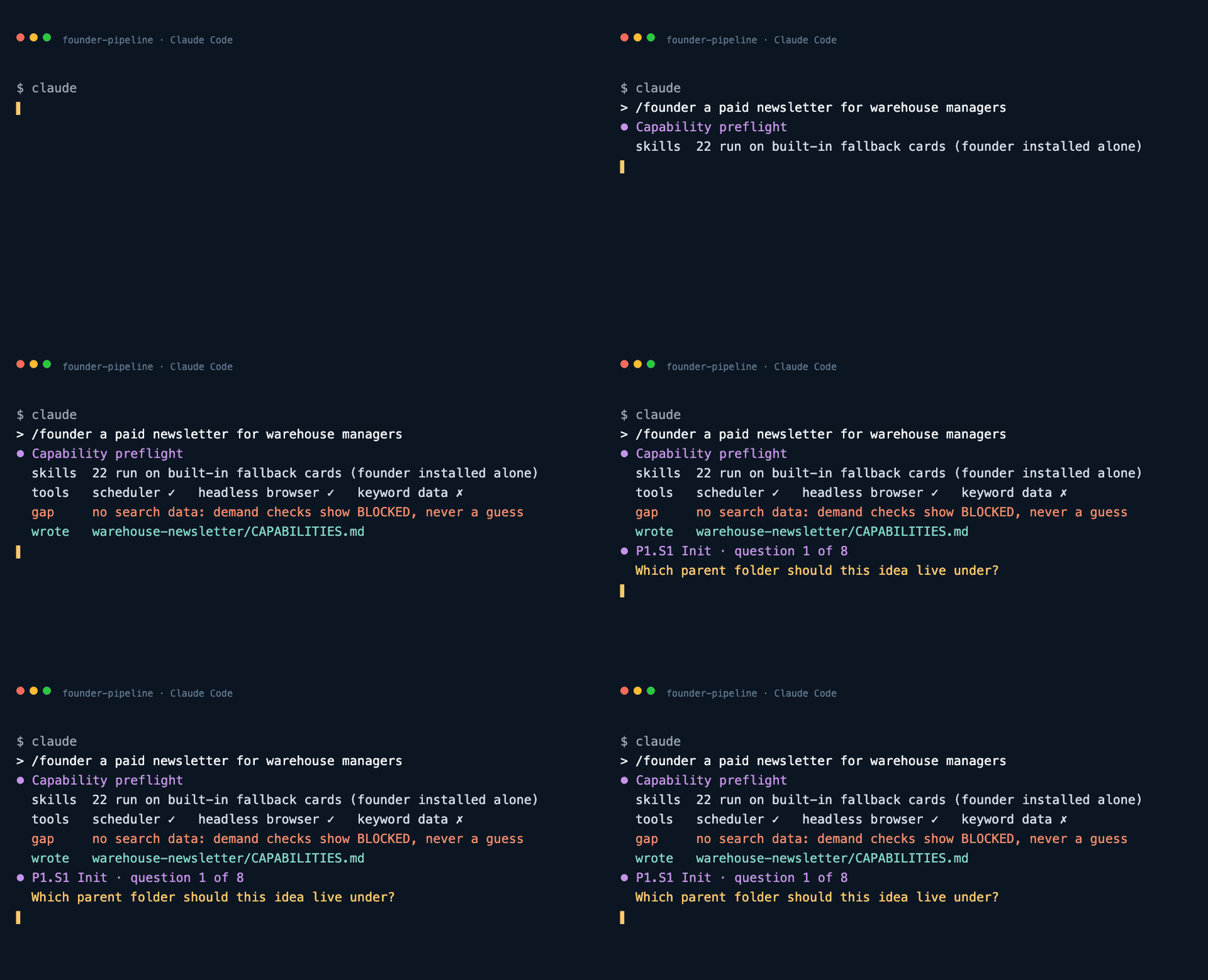
At step 1 the skill checks which skills and tools the session has and writes CAPABILITIES.md. A missing skill runs its built-in fallback card. A missing data source marks the criterion BLOCKED with a backfill task, instead of a guessed number. There are also four tracks: full, express (skips the explanations, keeps every gate), overnight, and the 48-hour smoke test.
The whole process at a glance
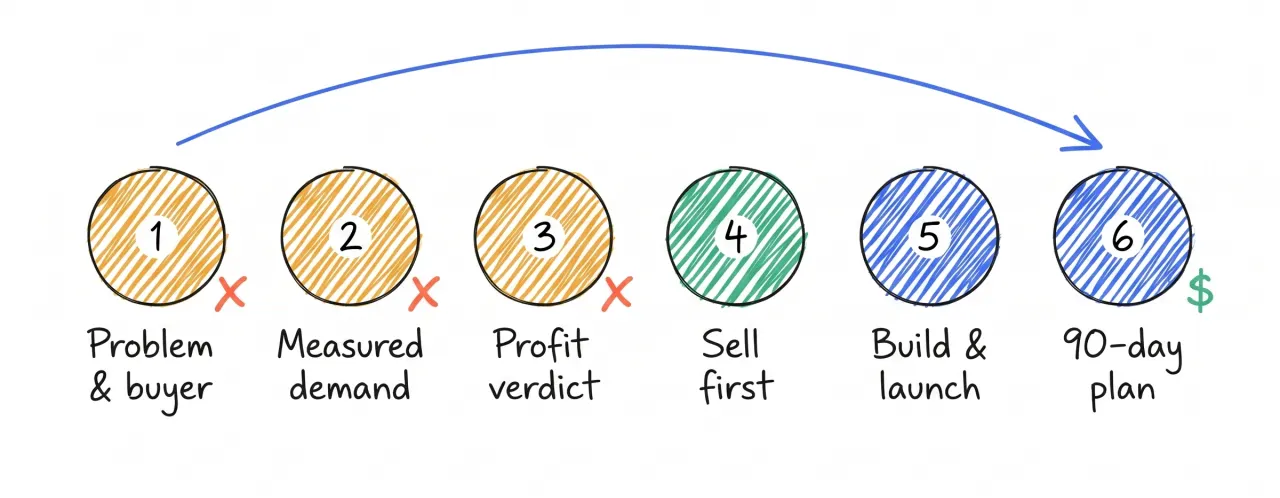
The six moves that matter. Each one maps to a phase, and the first three can end the idea.
1. Problem and buyer
Name the pain in 25 words, the buyer who has it and 10-20 real accounts, and decide which current work gives up hours. No hours to give is the first kill.
2. Measured demand
Measure search demand and competitors before a niche or a name is locked. No measurable demand is the second kill.
3. Profit verdict
Hours, money and price in one model, with the price named to real buyers. Under 1.5x your best stream per hour is the third kill.
4. Sell first
First touches to the named accounts, before anything is built, with every reply tracked.
5. Build and launch
Keywords, copy, site, competitor teardown and deck, then posts, listings and links. A site nobody has seen is inventory.
6. The 90-day plan
Channels picked from real reply data, one north star metric, and a plan whose first two weeks are customer-facing only.
Every step, every substep, and the model that runs it
Here is the whole pipeline as one map. Each card is one step: what it decides, the substeps inside it, the model that runs each substep, and the gate at the end. It’s long on a phone, so skip to the pen version and come back when you run it.
The whole pipeline, step by step
25 steps in 6 phases. Every substep shows the model that runs it.
Every step ends the same way
Phase 1: Ideation
Problem, buyer, demand, rivals, offer. The name comes last. 7 steps
P1.S1Init✕ Kill gate 1: no hours to give
Open the folder, see what you already have, and decide which existing work gives up its hours.
- Haiku 5.5Capability preflight: which skills and tools this session has
- Fable 5.1Focus guard: finish, park or kill any open stream
- Haiku 5.5Digest your notes, memos and screenshots into INTAKE.md
- YouName the portfolio trade, the profit bar and the house stack
- Fable 5.1Gate: Fresh-context critic tries to refute the portfolio trade
Writes:
brief.md · PROGRESS.md · CAPABILITIES.mdP1.S2ProblemThe pain in 25 words, why now with a dated source, and what people do instead today.
- Sonnet 5.5Brainstorm the pain and the origin story
- Haiku 5.5Find a dated, cited why-now shift
- Sonnet 5.5List 3+ alternatives, "do nothing" included
- Fable 5.1Gate: Critic attacks the draft, every criterion PASS/FAIL
Writes:
P1-Ideation.S2-Problem.mdP1.S3ICPWho buys, who is excluded, how big the market really is, and 10-20 named accounts.
- Haiku 5.5Size TAM, SAM, SOM from cited sources
- Haiku 5.5Fan out: one agent per source finds named buyers
- Sonnet 5.5Check reach paths: 5 of 10 must be warm
- Fable 5.1Gate: Critic attacks the draft, every criterion PASS/FAIL
Writes:
accounts.mdP1.S4Prediction✕ Kill gate 2: no measurable demand
Measured demand before any niche is locked. One delegated run returns the verdict.
- Haiku 5.5Gather search demand and query whitespace
- Fable 5.1Niche verdict: pick, near-miss, dead
- Sonnet 5.5Carry-forward keyword table for the build
- YouConfirm, reframe or kill the idea
- Fable 5.1Gate: Critic attacks the draft, every criterion PASS/FAIL
Writes:
predictions/niche-verdict.mdP1.S5CompetitionEvery rival researched in depth, including "do nothing" and "build it in-house".
- Haiku 5.5One scout per competitor: offer, price, proof
- Haiku 5.5Traffic, rankings and backlink gap from search data
- Fable 5.1Skeptics try to refute every claimed weakness
- Sonnet 5.5Positioning synthesis
- Fable 5.1Gate: Critic attacks the draft, every criterion PASS/FAIL
Writes:
one file per competitor + backlink gapP1.S6OfferThe only [category] that [does X] for [buyer]. Checked against the 3 closest claims.
- Sonnet 5.5Onliness statement and differentiators
- Fable 5.1Judge panel: buyer, copycat competitor, skeptic
- Sonnet 5.5Promise backtest and delivery-capacity math
- Sonnet 5.5Package it: scope, guarantee, risk reversal
- Opus 5.5Gate: Money gate: critic on a strong reasoning model
Writes:
P1-Ideation.S6-Offer.mdP1.S7NameThree candidates, a 7-word tagline, domain and trademark checked.
- Sonnet 5.5Three name candidates with rationale
- Haiku 5.5WHOIS and collision sweeps per market
- Fable 5.1Judge panel picks, tagline in your voice
- YouGut-check with 2 real buyers
- Fable 5.1Gate: Critic attacks the draft, every criterion PASS/FAIL
Writes:
P1-Ideation.S7-Name.md
Phase 2: Viability
Hours, money and price. Ends on the profit verdict. 4 steps
P2.S1Economics∥ runs alongside P2.S2Time and money in one model: hour budget, roadmap, forecast, 100/50/25% scenarios.
- Sonnet 5.5Weekly hours split three ways, checked against the calendar
- Sonnet 5.5Roadmap: ship, pilot, public, scale
- Sonnet 5.5Forecast, CAC, LTV, payback, three scenarios
- Opus 5.5Profit per founder-hour against your bar
- Opus 5.5Gate: Money gate: critic on a strong reasoning model
Writes:
P2-Viability.S1-Economics.md + sheetP2.S2Tooling∥ runs alongside P2.S1What delivery, forms, booking, payment and contracts run on. New costs go back into P2.S1.
- Sonnet 5.5Map the client motion: form to contract
- Sonnet 5.5Brand-kit check before anything gets built
- Sonnet 5.5Gate: Routine judge: low-risk step
Writes:
P2-Viability.S2-Tooling.mdP2.S3PricingValue-based price, tiers, and a 10-criterion scorecard that must reach 95/100.
- Opus 5.5Tier design and willingness to pay
- Sonnet 5.5Scorecard arithmetic, until 95/100
- YouName a price in 10+ real conversations
- Opus 5.5Floors: 3x unit cost, RoI floor, margin floor
- Fable 5.1Gate: Price-ceiling critic
Writes:
P2-Viability.S3-Pricing.mdP2.S4Validation✕ Kill gate 3: under 1.5x your best stream per hour
Clears the bar, or dies. "Profitable but mediocre" is a kill.
- Haiku 5.5Find every [assumption] tag in the stream
- Sonnet 5.5Impact x uncertainty, experiments for the risky ones
- Sonnet 5.5Pre-mortem and kill criteria at months 3, 6, 12
- Fable 5.1Two critics: one refutes profit, one refutes focus
- YouGate: You read the verdict and sign, or the stream is killed
Writes:
PROFIT VERDICT
Phase 3: Clients
Sell before you build. Nothing in phase 4 may delay this. 1 step
P3.S1OutreachFirst touches to the 10-20 named accounts, in waves, with a learning gate between them.
- Haiku 5.5Enrich every account in parallel
- Sonnet 5.5Segments and waves, CRM and UTMs before wave 1
- Fable 5.1Three-sentence messages in your voice
- YouYou press send
- Fable 5.1Gate: Critic attacks the draft, every criterion PASS/FAIL
Writes:
one file per account + messages
Phase 4: Build
Email, keywords, copy, site, competitor teardown, deck. The slow compounders. 6 steps
P4.S0EmailMail on the new domain, set up once, before any copy or site uses an address.
- Sonnet 5.5DNS records: one SPF, one DMARC at p=none
- YouClicks in the mail admin console
- Haiku 5.5Verify with dig
- Sonnet 5.5Gate: Routine judge
Writes:
MX · SPF · DKIM · DMARCP4.S1Keywords∥ preps during P3.S13-7 measured primary keywords and the locale decision, made here and never retrofitted.
- Sonnet 5.5Seed from the P1.S4 carry-forward table
- Haiku 5.5SERP agents per cluster, AI-search probes
- Sonnet 5.5Locale decision and translation glossary
- Sonnet 5.5Gate: Routine judge
Writes:
keyword contract + glossaryP4.S2CopyEvery string of the site written once, in your voice, never fanned out.
- Fable 5.1Page copy in your voice
- Opus 5.5Persuasion pass per page
- Fable 5.1Overpromise check, adversarial score 8/10
- Sonnet 5.5Lead-magnet spec
- Fable 5.1Gate: Critic attacks the draft, every criterion PASS/FAIL
Writes:
one file per pageP4.S3WebOne background build on your declared stack, then SEO and AI-search hardening.
- Sonnet 5.5One delegated build agent
- Sonnet 5.5SEO, AI-SEO, llms.txt written last
- Fable 5.1Final voice pass on the live copy
- Fable 5.1Gate: Critic attacks the draft, every criterion PASS/FAIL
Writes:
live siteP4.S4SourceGapRead the top 3 rivals’ raw HTML, adopt what they do better, fix it live.
- Haiku 5.5One agent per competitor pulls raw HTML
- Sonnet 5.5Four-layer gap matrix
- Sonnet 5.5One fix agent redeploys, then re-crawl
- Fable 5.1Gate: Critic attacks the draft, every criterion PASS/FAIL
Writes:
gap matrix + fixesP4.S5DeckHTML to PDF from the live site, so prices and copy never drift.
- Sonnet 5.5Deck build from the site’s components
- Fable 5.1Buyer click test, any new copy
- Fable 5.1Gate: Critic attacks the draft, every criterion PASS/FAIL
Writes:
<site>/deck
Phase 5: Activation
Publish it. A site nobody has seen is inventory. 4 steps
P5.S1Launch∥ runs alongside P5.S2Posts, packaged artifacts, lead magnet, day-0 rank baseline. One agent per item.
- Sonnet 5.5One agent per launch item
- Fable 5.1First 2-3 blog drafts
- Haiku 5.5Re-fetch every evidence URL: 200 or it did not ship
- Fable 5.1Gate: Critic attacks the draft, every criterion PASS/FAIL
Writes:
live URLs, listings, baselineP5.S2LinksExecute the backlink gap from P1.S5, register in directories, wire internal links.
- Sonnet 5.5Backlink gap and directory listings
- Sonnet 5.53+ internal links into every money page
- Fable 5.1Outreach pitches in your voice
- Fable 5.1Gate: Critic attacks the draft, every criterion PASS/FAIL
Writes:
backlinks + listingsP5.S3Queues∥ runs alongside P5.S4Every "awaiting you" item from earlier steps becomes one tracked row.
- Haiku 5.5Sweep every step file for blocked items
- Sonnet 5.5One queue row per item, deduped
- Sonnet 5.5Gate: Routine judge
Writes:
queues/P5.S4Prediction cadenceThe dated bets from P1.S4 get a scheduled re-check, so they cannot be forgotten.
- Sonnet 5.5Recurring prediction run on a scheduler
- Sonnet 5.5One direct demand signal per bet
- Sonnet 5.5Gate: Routine judge
Writes:
PREDICTIONS.md
Phase 6: Adoption
Channels from real data, one north star, the 90-day plan. 3 steps
P6.S1GTM∥ runs alongside P6.S2Three channels, at least one backed by observed numbers from outreach and launch.
- Sonnet 5.5Readout of real reply rates and objections
- Sonnet 5.5Pick 3 channels, paid only if CAC math works
- Fable 5.1Gate: Critic attacks the draft, every criterion PASS/FAIL
Writes:
channel briefsP6.S2KPIsOne behavioural north star, 3-5 leading and 2 lagging metrics, each with a baseline.
- Sonnet 5.5North star and metric tree
- Haiku 5.5Automated reads from analytics and CRM
- Sonnet 5.5Gate: Routine judge
Writes:
P6-Adoption.S2-KPIs.mdP6.S3ExecuteLean Canvas, pricing card, profit verdict verbatim, weeks 1-2 customer-facing only.
- Sonnet 5.590-day plan with dated kill conditions
- Fable 5.1Critic on the whole stream
- YouYou sign the plan
- Fable 5.1Gate: Completeness critic: what is missing?
Writes:
90-day plan, 2 pages max
Phase 1, Ideation: the idea earns its name
Seven steps that decide whether the idea deserves any build at all. Two of the three kill gates live here, because this is where changing your mind still costs nothing.
P1.S1 · Init
The capability preflight runs first, then the focus guard: any other stream still mid-pipeline gets finished, parked or killed before this one starts. Eight questions follow, one at a time: the folder, the slug, the horizon, the portfolio trade, the profit bar, the house stack, the markets and the currency. A fresh-context critic on Fable tries to refute the trade. My AI coach failed here.
P1.S2 · Problem
The pain in 25 words or fewer, a why-now backed by a dated, cited shift, and at least 3 alternatives, “do nothing” included. Web search and scraping on Haiku find the sources, Sonnet drafts. Claims without a source drop to an [assumption] tag with a plan to test them.
P1.S3 · ICP
Buyer role, at least 2 exclusions, and TAM/SAM/SOM where SAM and SOM must be cited. Then 10-20 named accounts, each with a real person, a URL and a route in, at least 5 of 10 reachable warm. One Haiku agent per source class sweeps for names, and the result becomes accounts.md, the list every later step reads.
P1.S4 · Prediction
One delegated subagent runs the whole prediction skill: measured search demand from DataForSEO, query whitespace against the alternatives from step 2, a niche verdict (pick, near-miss, dead), and 3 dated bets with check dates. Synthesis runs on Fable. I then confirm, reframe or kill the idea.
No measurable demand is the second kill gate. For the AI coach this step never ran, because I’d already built the page.
P1.S5 · Competition
One Haiku scout per competitor, “do nothing” and “build it in-house” included, each returning offer, public price, proof and channels. DataForSEO adds traffic, rankings and a backlink-gap table. Every claimed weakness of a rival then faces a Fable skeptic, because a wrong “they can’t do X” poisons the offer. This is where Spreadmetrics died.
P1.S6 · Offer
The onliness statement, “the only [category] that [does X] for [buyer] in [territory]”, checked against the 3 closest claims on the web. A judge panel of buyer, copycat competitor and skeptic attacks the differentiators. The step also owns a promise backtest (“held in N of M past cases”) and the delivery-capacity math from the calendar. The critic runs on Opus, because it’s a money gate.
P1.S7 · Name
Three candidates, a tagline of 7 words or fewer, WHOIS and collision checks in every market, and a trademark spec. Haiku sweeps domains and collisions, a Fable judge panel picks, and 2 real buyers do the gut-check.
Phase 2, Viability: hours, money, verdict
Four steps that turn the idea into numbers and end on the third kill gate.
P2.S1 · Economics
Time and money in one model. Weekly hours split three ways and checked against the calendar, a roadmap (ship, pilot, public, scale), a 12-month forecast, CAC, LTV and payback. Three scenarios (100%, 50%, 25%) give profit per founder-hour against my bar. The model lives in Google Sheets when the connector is there, markdown when it isn’t.
P2.S2 · Tooling
What delivery runs on: forms, booking, payment, contracts, email, plus at least one automation. A brand-kit check happens here, so the build never discovers mid-way that no brand exists. New costs flow back into the economics step, which is why the two run in parallel.
P2.S3 · Pricing
The pricing skill runs first: one job in the buyer’s words, an alternative anchor, value math the buyer can do in 30 seconds, tiers, and a 10-criterion scorecard that must reach 95/100. Then I name the price in 10+ real conversations. Floors apply on top: at least 3x unit cost, at least your hourly bar times the hours you put in, and at least 1.2x the full cost including everyone’s time. Tier design runs on Opus, the price-ceiling critic on Fable.
P2.S4 · Validation
The profit verdict: clears the bar, conditional, mediocre (kill) or not viable (kill). A Haiku agent finds every [assumption] tag in the stream, the risky ones get real experiments, and kill criteria are set for months 3, 6 and 12. Two Fable critics run in parallel with opposing framings, one refuting the profit case and one refuting the focus case.
LTV:CAC must reach 3 and payback must fit in 12 months. The AI coach would have ended here, which is why I wrote the override instead.
Phase 3, Clients: sell before you build
One step, deliberately its own phase, so nothing in the build can delay it.
P3.S1 · Outreach
The 10-20 accounts from accounts.md, split into 2-4 segments and sent in waves with a learning gate between them. Haiku enriches every account in parallel. The CRM (Attio for me) and UTM tracking are wired before wave 1, so every reply is traceable.
Each message is 3 sentences or fewer, written in my voice on Fable, staged as a draft. Pressing send is my click.
Phase 4, Build: the slow compounders
Six steps that make the stream findable, and they run while outreach replies come in.
P4.S0 · Email
The new domain gets working mail before any copy uses an address, set up so it doesn’t land in spam: MX, one SPF record, DKIM and DMARC at p=none, plus role aliases. The clicks in the mail admin console are mine, verification with dig is Haiku’s.
P4.S1 · Keywords
The keyword contract: 3-7 primary keywords, each with measured volume, difficulty and intent, seeded from step 4’s carry-forward table. Haiku runs SERP checks per cluster and AI-search probes. The language decision is made here, because adding a second locale after launch means re-cutting every URL.
P4.S2 · Copy
Every string of the site, written once and in one voice on Fable. Copy is never fanned out. An Opus persuasion pass checks proof placement and objections per page, and a Fable overpromise check must score 8/10 or better. The step also writes the meta spec and the lead-magnet spec.
P4.S3 · Web
One delegated build agent on the declared stack, for me Astro on Cloudflare Workers. Hardening follows: SEO audit, AI-search audit, llms.txt written last from the keyword contract, PostHog events, Lighthouse 95+ on mobile, and a final voice pass. The page copy never enters the main context.
P4.S4 · SourceGap
One Haiku agent per top-3 competitor pulls the raw HTML of a landing page and a blog post. Sonnet builds a four-layer gap matrix: head meta, JSON-LD, body elements, AI surfaces. One fix agent ships the High and Moderate gaps to the live site, then everything gets re-crawled.
P4.S5 · Deck
HTML to PDF through headless Chrome, built from the live site’s own components, so prices and copy never drift from the web. A Fable buyer click test checks any new copy.
Phase 5, Activation: publish it
Four steps, because a site nobody has seen is inventory.
P5.S1 · Launch
One agent per launch item, in parallel: 2-3 blog posts, the packaged artifact (an MCP server, an agent skill, a CLI), the lead magnet, a day-0 ranking baseline and search-engine indexing. A sanitization grep runs before anything public ships. A Haiku agent then re-fetches every evidence URL: a 200, or it didn’t ship.
P5.S2 · Links
The backlink gap from phase 1 gets executed, the stream gets listed in the directories and registries its buyers browse, and every money page gets at least 3 internal links. Outreach pitches go out in my voice.
P5.S3 · Queues
A Haiku sweep reads every earlier step file for “awaiting”, “blocked” and “owner must”, and each hit becomes one task row. For me those rows land on a Notion board with a daily digest. Without a board, the queue files in the stream folder are the system of record.
P5.S4 · Prediction cadence
The dated bets from phase 1 get a scheduled re-check, each with at least one direct demand signal. For me that’s a recurring job; for anyone else it’s a cron, a CI schedule or a dated task row.
Phase 6, Adoption: run it from real data
Three steps that pick channels and numbers only after outreach and launch have produced observable data.
P6.S1 · GTM
A readout of real reply rates, objections and launch metrics comes first. Then 3 channels, at least one backed by observed numbers, plus the sales motion and the narrative. Paid traffic clears only when a budget is named and the CAC math works.
P6.S2 · KPIs
One behavioural north star, 3-5 leading and 2 lagging metrics, each with a baseline and an automated read from PostHog, Attio or DataForSEO. Vanity metrics get checked out explicitly.
P6.S3 · Execute
Lean Canvas, the pricing card with its score, the profit verdict verbatim, and a 90-day plan where weeks 1 and 2 are customer-facing only. Milestones carry dated kill conditions. A Fable critic reads the whole stream, a completeness critic asks what is missing, and I sign the plan. Two pages, maximum.
My stack, and how it connects
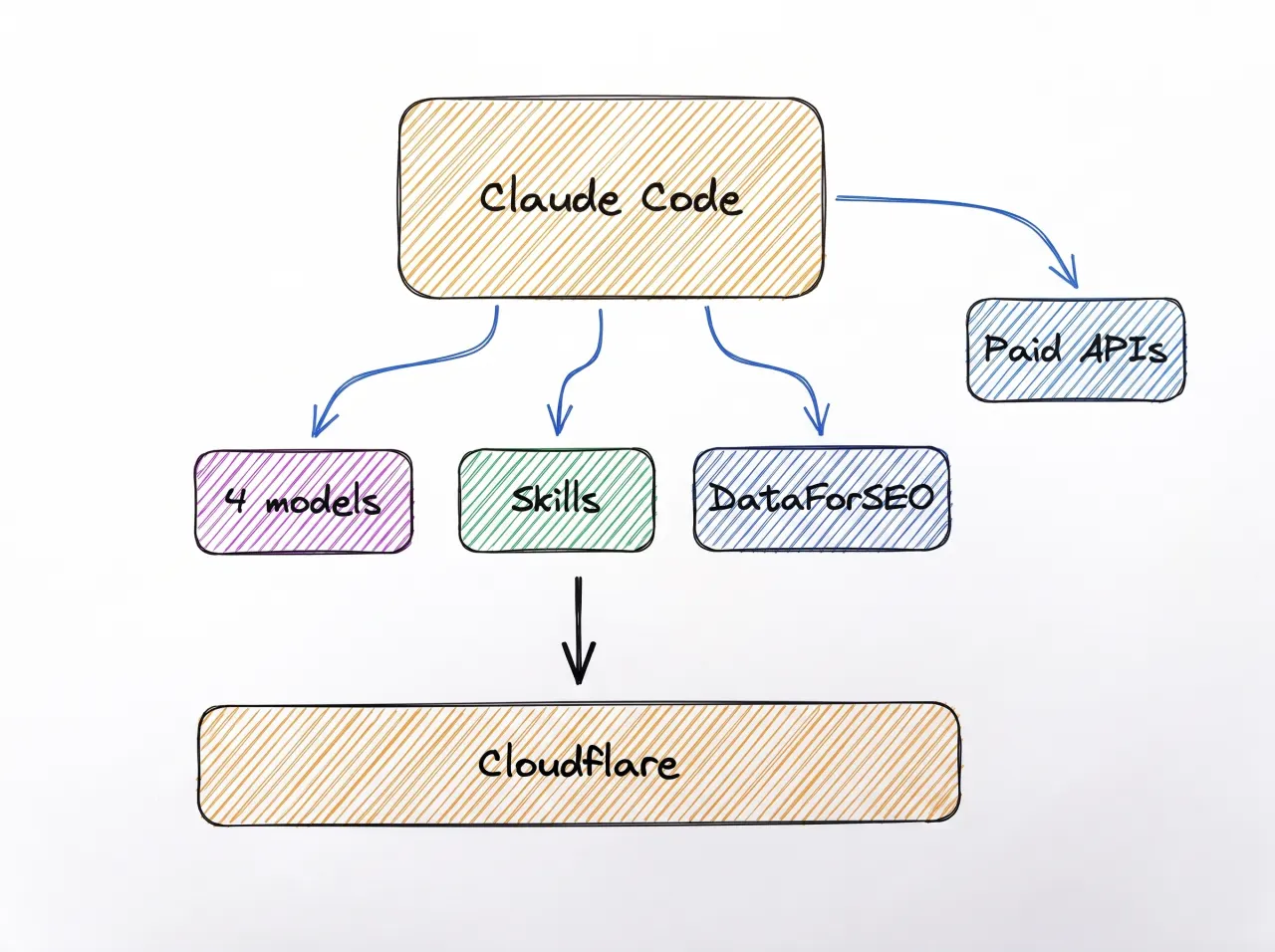
Claude Code is the hub. Everything else plugs into it as a model, a skill, an MCP server or a command-line tool.
Claude Code and the models
Claude Code runs the main loop, spawns subagents and executes the workflow scripts. The models are the four tiers above: Haiku 5.5 for gathering, Sonnet 5.5 for drafting, Opus 5.5 for money judgment, Fable 5.1 for kill passes, critics and copy.
DataForSEO for demand
DataForSEO is the one paid source the early phases can’t fake: search volume, keyword difficulty, live SERPs, competitor traffic, backlinks and WHOIS, over its MCP server or REST API. Without it, the demand criteria show BLOCKED.
Firecrawl for the web
Firecrawl scrapes competitor pages, pricing pages and raw HTML for the SourceGap teardown, where plain fetches lose the <head> and JSON-LD.
Cloudflare for everything that ships
Cloudflare hosts every site as an Astro build on Workers, plus DNS, Turnstile on forms, KV and D1 storage, and the Worker that queues pages for search-engine indexing. Deploys run through wrangler and GitHub Actions.
The rest of the paid stack
Attio is the CRM for accounts and outreach waves. PostHog tracks UTMs, events and the KPIs. Notion holds the task board and the data-points database every published number comes from. Google Workspace supplies mail, calendar and the spreadsheet model through connectors. Resend sends form mail, Gemini draws these sketches, and 1Password feeds the secrets into every deploy.
The glue is boring on purpose. Every connection degrades in one direction: MCP server, then the vendor’s REST API with my credentials, then BLOCKED and a task to backfill.
The skills I run it with
The public plugin bundles the core of these. On my own machine the founder skill calls these skills by name, and anything it can’t find falls back to a card inside the skill.
| Skill | What it does in a run | Steps | Where to get it |
|---|---|---|---|
/critical | The adversarial critic behind every gate, ends with a 0-10 score | Every step | Public repo, also in the plugin |
/marian-voice + /marian-humanize | Every reader-facing word in my voice, AI patterns removed | P1.S7, P3.S1, P4.S2-P4.S5, P5.S1-P5.S2 | In the plugin as /brand-voice + /humanize; humanize repo |
/prediction | Demand data, niche verdict, dated bets, re-check cadence | P1.S4, P5.S4 | In the plugin |
/pricing | JTBD + value pricing, 10-criterion scorecard to 95/100 | P2.S3 | In the plugin |
/offers | Scope, guarantee, risk reversal | P1.S6 | In the plugin |
/scout, /brainstorm, /plan | Landscape research, divergent options, milestones with owners | Phases 1, 2, 6 | In the plugin |
/deep-research, /enrich, /competitive-brief | Cited research, account enrichment, competitor profiles | P1.S3, P1.S5, P3.S1 | Private; inline cards in the skill |
/web-keyword | Keyword contract, locale decision, translation glossary | P4.S1 | In the plugin |
/web-site-creator | Astro on Cloudflare scaffold, SEO and AI-search hardening | P2.S2, P4.S3 | In the plugin |
/seo-audit, /ai-seo, /ai-seo-llms-builder | Technical SEO, AI-citation readiness, llms.txt from real queries | P4.S1-P4.S4 | In the plugin |
/marketing-psychology, /lead-magnets | Persuasion pass per page, lead-magnet spec | P4.S2, P6.S1 | In the plugin |
/blog-launch, /translate-page | Gated blog pipeline (this post went through it), CZ and PL mirrors | P4.S2, P5.S1 | Blog pipeline in the plugin; translation private |
/web-indexation, /web-backlinks, /web-listings | Indexing, earned links, directory listings | P5.S1-P5.S3 | In the plugin |
/ai-mcp-launch, /ai-skill-launch | Publishing an MCP server or an agent skill to the registries | P5.S1 | Private; publication checklist inline |
posthog:*, Notion:*, cloudflare:* | Analytics instrumentation, task board, Workers and Turnstile | P3.S1, P4.S3, P5.S3, P6.S2, P6.S3 | Vendors’ own public plugins |
Install it in two minutes, connect what you have
The pipeline is a free, MIT-licensed skill for Claude Code: github.com/marian-kamenistak/founder-pipeline. Version 0.2 runs on Claude Code alone. Every other skill and tool it mentions is optional, and each one has a fallback card inside the skill.
The whole plugin
You get the founder skill plus the 21 specialist skills it calls: the critic, prediction, pricing, offers, voice, SEO and launch.
claude plugin marketplace add marian-kamenistak/founder-pipeline
claude plugin install founder-pipeline@founder-pipeline
Then type /founder-pipeline:founder in the folder where your idea should live.
Only the founder skill
Copy one folder. It picks up your own /critical or voice skill if you have one with the same name, and runs its built-in card if you don’t.
git clone https://github.com/marian-kamenistak/founder-pipeline.git
cp -r founder-pipeline/plugins/founder-pipeline/skills/founder ~/.claude/skills/founder
Connect what you have
Step 1 writes a CAPABILITIES.md into your idea’s folder: what it found, what runs on fallback, and the one missing connection that costs you the most evidence. Usually that’s search data, so connect a keyword data provider first. The rest (CRM, analytics, mail, task board) takes one command each, listed in the install guide.
Running it costs me about $27-37 a month on top of what I already pay for, most of that the Claude subscription. A full run takes about two and a half hours of my desk time, not counting the conversations with buyers. It sits next to the other free tools on the AI coaching tools page.
The pen version
The plugin is only the proof. The mechanism is the refusal: a critic that must attack, criteria that must fail loudly, a human signature before the next step, and three questions with the power to end the whole thing.
You can steal that with a pen. Take the newest plan sitting in your Notion and hold it to the three kill questions:
- Which current work gives up hours for this? If you’re employed, that’s your evenings, a side project, or a team initiative.
- Where is the measured demand, and who said yes to a price?
- Does it beat your best current work per hour of your life at the pessimistic case?
Refuse to advance until every answer has evidence next to it.
Still a hunch? Run the 48-hour smoke test
Write the pain in one sentence, one buyer role, the offer in one sentence, 10 named accounts and a 3-sentence message asking for a 20-minute problem call. Send all ten within 48 hours, then read the result at day seven:
- 3 or more booked calls: go, and start the full pipeline.
- 1 or 2: rework the pain or the buyer once, then send ten more.
- 0: park the idea and write one paragraph on why it died.
If you run a solo practice, my solopreneur strategy has the portfolio side of question one. When you want a second pair of eyes on the verdict, that’s a mentoring session.
Kill it or fund it, in writing, this month.
[Writing time: 3h]