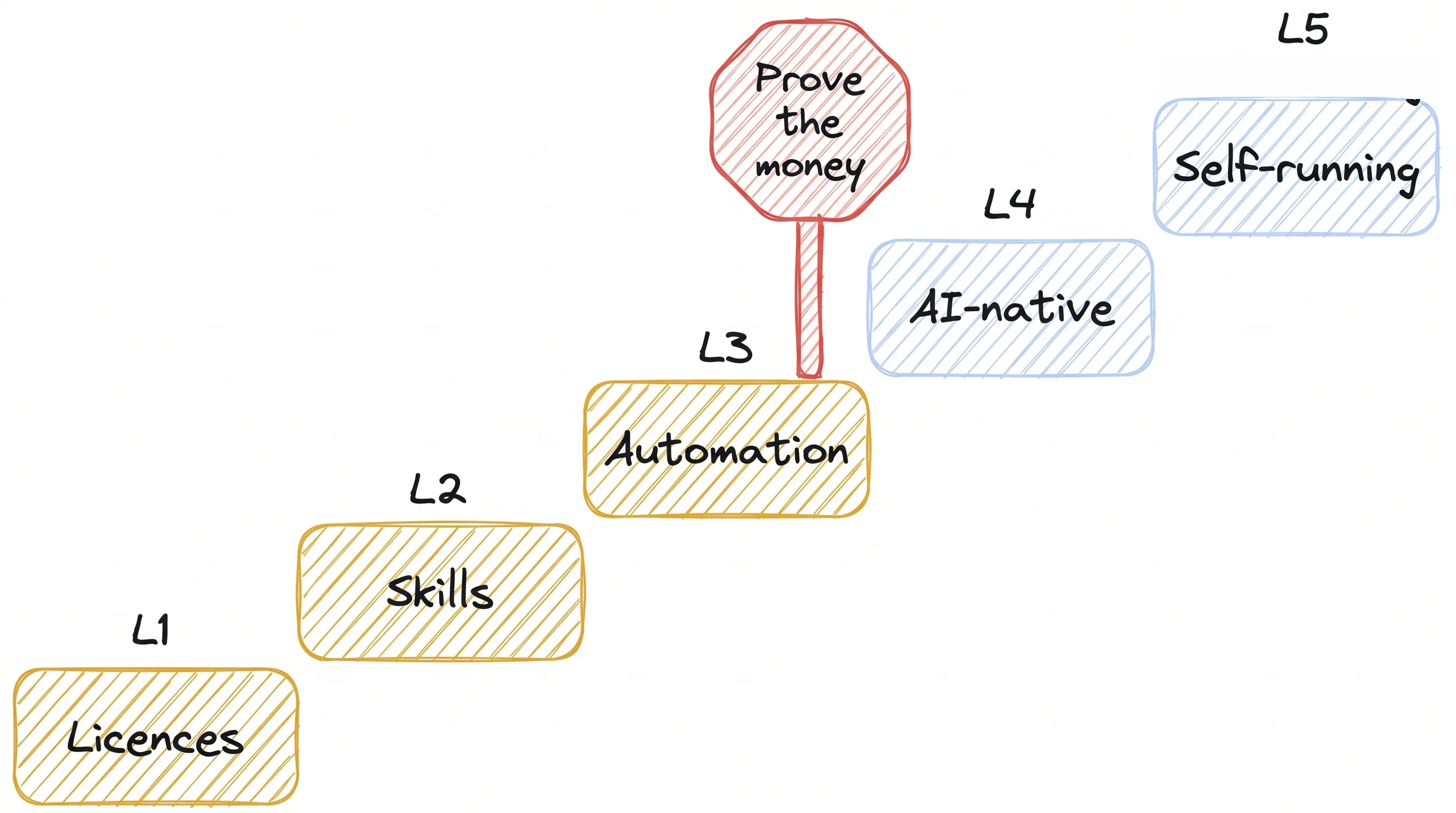
A Head of AI is the person a company puts in charge of its AI work once that work has outgrown a side project: usually a small team, one or two product surfaces, and a mandate written much wider than the headcount that arrives with it.
That gap between the mandate and the headcount explains most of the role. Two people with this title can have entirely different jobs, depending on how much of the mandate came with people and money attached.
Two roads in, and where the first weeks break
Most people in this seat came from one of two places.
The first road is engineering leadership. An engineering manager or a staff engineer ran the company’s first serious AI project, it shipped, and the title followed the work. These people know how to get something into production and how to argue with a roadmap.
The second road is data and machine learning. A data science lead or an ML engineer with depth gets handed the org. They know the material. The new part is everything around it: hiring against labs that pay more, saying no to a VP with a demo, and a week spent mostly convincing people instead of building.
You’d expect the two roads to break in opposite places, the engineer on the models and the data scientist on the org. The cases on record point at the org side for both. Two intro calls from summer 2026 show what that looks like in the first weeks. Both people had just been given the first AI leadership title their company ever had, and both came up through engineering.
Neither problem was a model. The first person had no team yet, hiring planned but months away, and three stakeholders who wanted three different things: the line manager wanted two or three agents or workflows live in production within three months, the tech lead wanted an AI governance framework and standards, and the CEO wanted a change of mindset across the whole company. The second had just started in a similar seat and called it “absolute chaos”. Leaders wanted everything by the next day, and he’d been brought in as an engineering leader whose strength was use cases.
How either story continues isn’t on record, so this page doesn’t guess.
What comes with the title
The scope tends to settle into four things, roughly in the order they eat the calendar:
- The applied team. A handful of engineers who build AI into the product. Hiring for it is some of the hardest hiring in the company right now, and it’s your problem.
- The shared platform. Evaluation, prompt and model versioning, guardrails, cost controls. Everything the other teams use so they aren’t each solving it privately. The AI platform engineer page goes through those layers one by one.
- The no. Most functions have a demo and an idea. Someone has to say which three get built this year and take the heat for the rest. This is the part people underestimate before they take the job.
- The spend. A leader who can’t explain last month’s inference bill line by line loses the argument the first time it doubles. Learning to read that invoice properly is a week of work that pays back for years.
The company’s AI strategy across sales, legal, HR and operations isn’t on that list. That belongs to a wider seat, covered in VP of AI vs Chief AI Officer. A Director of AI title often covers the same ground as Head of AI, and the Director of AI page splits it into a research, a product and a transformation version.
Head of AI vs Head of Engineering
The two titles sit close enough that people negotiate between them without seeing the trade.
| Head of Engineering | Head of AI | |
|---|---|---|
| People | The whole function, through managers | A small team, often single-digit |
| Owns | Delivery, hiring, org shape, tech direction | One product surface plus the shared AI platform |
| Where risk sits | Roadmap slips, managers churn | A feature is confidently wrong in front of a customer |
| Measured by | Predictable delivery and org health | Whether the AI bets shipped and what they cost |
| Next step up | VP of Engineering or CTO | VP of AI, Chief AI Officer, or back into engineering leadership |
Head of Engineering is the broader job and Head of AI is the more visible one. Which of those is worth more to you depends on whether you want to run an organisation or own a bet, and that’s about you far more than about the market.
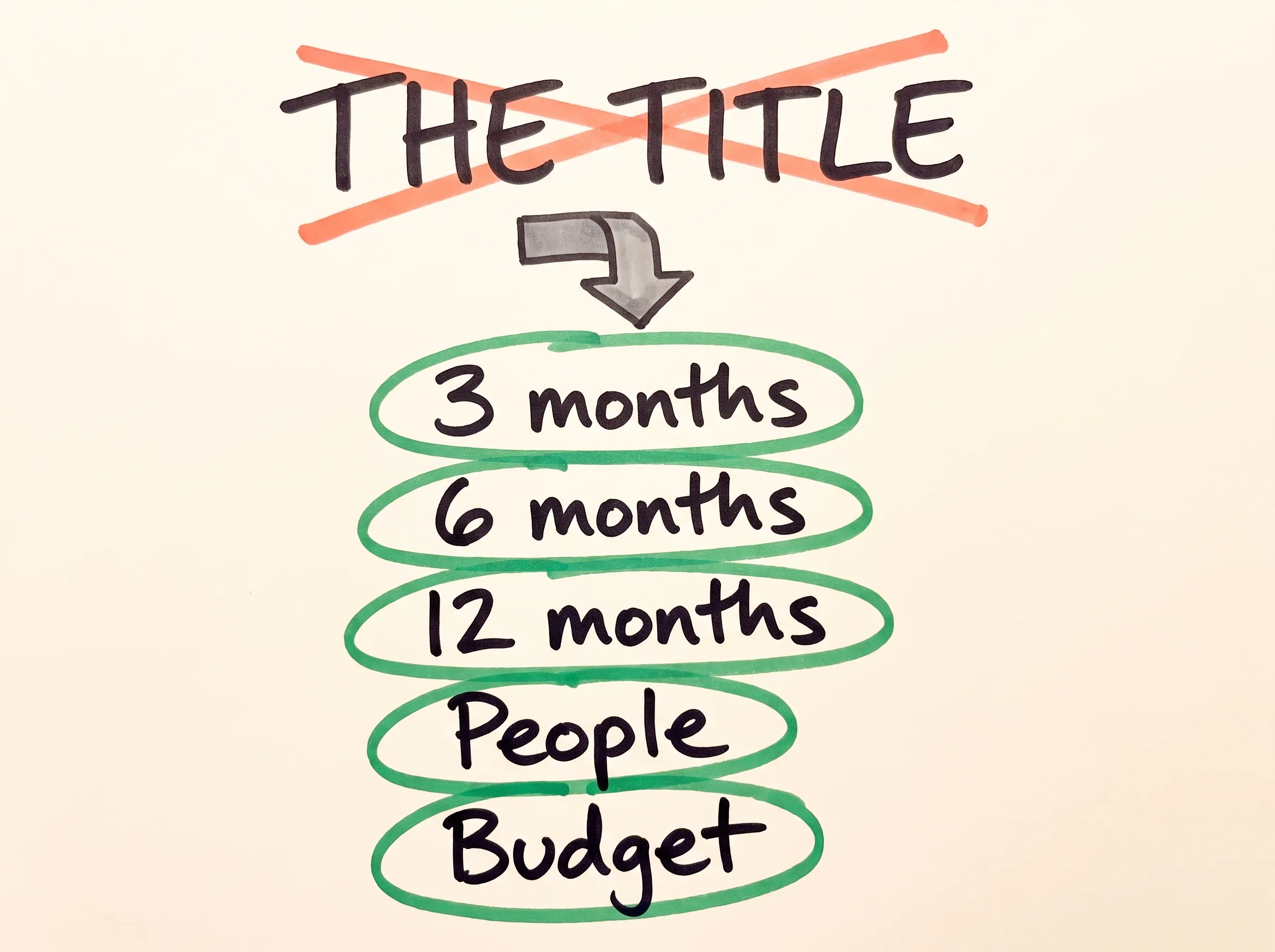
Will the title still be around in five years? I would not bet a career on the title. The contract decides: your goals at 3 months, 6 months and 12 months, the people you get, and the budget.
The seat also changes shape on purpose. When I advise a company, I tend to build its first AI team inside tech and, after three months, move the members out to the business departments, because that’s again where the money is. The AI transformation playbook has a contract one-pager to start from.
Pay, from live postings
Pay for the title spreads wide. Glassdoor’s US average for a Head of AI is $355,844, but from only 23 submitted salaries, so treat it as a rough marker. Live postings in October 2026 ran from $225,000 to $250,000 base for a remote North America seat at the agency WongDoody, to $300,000 to $400,000 at the New York venture firm Primary. In the UK, Local Pensions Partnership advertised the seat at £90,000 to £100,000, “working with the Chief Technology Officer” and expected to “develop the AI team”.
None of those three ads names a reporting line. Ask for it before you ask about the number, because it tells you which version of the job you’re pricing.
Month one in the seat
Three things, in this order:
- Write down what you were hired to do and get it signed. One paragraph, agreed with whoever gave you the title. Six months in, that paragraph is your best defence against a mandate that quietly grew.
- Ship one small thing that survives real users. Credibility in this seat comes from something in production, not from a strategy deck. Pick the smallest bet with a visible surface.
- Publish the cost. Before anyone asks. A leader who brings the numbers to the exec meeting unprompted gets believed later, when the number is bad.
When the honest answer is no
Some versions of this seat should be refused, and refusing one well is a career skill that rarely gets taught.
The version to refuse comes with no headcount of your own, engineers borrowed from teams whose managers are measured on something else, and a sponsor who wants the AI story for the board more than the AI product. That job carries all the accountability of the role and none of the levers. Taking it costs a year and leaves you a CV line that rarely survives an interview, because the first question is what you shipped.
The version worth taking looks unglamorous by comparison: a small funded team, one product surface, a clear owner above you. It’s a smaller job and a much better one.
If you can’t tell which version the offer on your desk is, bring it to Head of AI mentoring, together with the mandate, the org chart and the contract draft. Since 2019 that mentoring has covered 3,662 sessions and 317 leaders. The intro call costs you nothing.
Seats next to this one
- VP of AI or Chief AI Officer: which part of the AI mandate each seat carries
- Director of AI, in its research, product and transformation versions
- Applied AI engineer: the role your team hires first, and the rungs above it
- AI program manager: who keeps a moving AI program on track
- Head of Engineering: the seat this one gets compared with
- AI transformation playbook: the first six months, month by month