A VP of AI runs the organisation that builds a company’s AI, while a Chief AI Officer owns the company-wide AI mandate from the executive team, usually with a small staff, and gets results through other people’s teams.
That’s the clean version. In practice one company’s VP of AI, another’s Chief AI Officer and a third’s Head of AI can be doing the same work, and three people with the same one of those titles can be doing quite different jobs. The noun on the offer letter is weak evidence. What the person gets to control is strong evidence.
Three seats, one mandate
| VP of AI | Chief AI Officer | Head of AI | |
|---|---|---|---|
| Budget you control | Headcount and infrastructure for your org | A small staff, plus influence over other people’s budgets | One team, one platform line |
| Who you have to convince | Your peers on the exec team | Every function head, one at a time | Your CTO and the teams next to you |
| What gets you fired | The AI roadmap didn’t ship | A year passed and nothing changed | A customer saw the AI get it badly wrong |
| Where the title travels next | CTO, or VP of Engineering at a bigger company | Board and advisory work, other CAIO seats | VP of AI, or back into engineering leadership |
The CTO sits outside that table on purpose. In a company with none of these seats, the CTO holds the whole AI mandate by default, and each of the three titles is a way of putting part of it down.
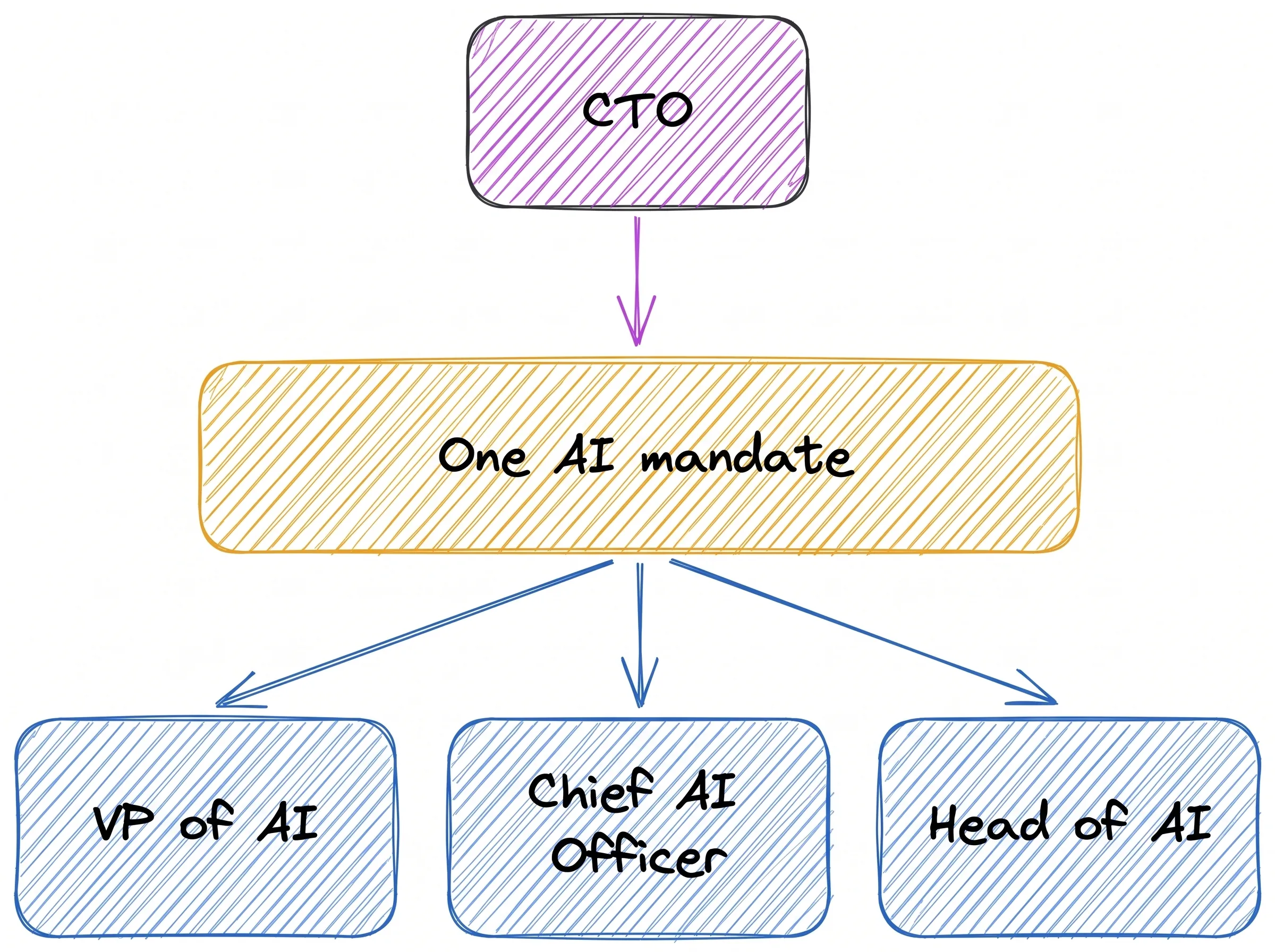
For the non-AI version of that boundary, VP of Engineering vs CTO draws the original line, and the AI titles repeat it. One level below these three, the Director of AI page shows how the same mandate splits again into research, product and transformation seats.
The mandate without the budget
The Chief AI Officer seat is the one most exposed to a single failure pattern.
You get a company-wide brief, a title with “Chief” in it, and two people. The engineers who’d build anything report to the CTO. The data belongs to the platform team. The budget for the tools sits with whichever function pays for them. You’re accountable for the company’s AI outcomes and can direct none of the resources that produce them.
When I see a Chief AI Officer who’s solo, no direct reports, that’s basically path down to hell, because they can’t change much by writing strategies and having no resources or people.
It’s possible to succeed in that job through relationships, patience, and being right often enough that a no starts to carry weight. That’s a different skill from anything an engineering career trains. A strong technical record doesn’t carry over by itself, because that record was built with a team that did what you decided.
What helps is boring and early. One person in a first-AI-leader seat this summer had the brief, no team yet, and three stakeholders pulling three ways. The intro call ended with three suggestions: a 12-month roadmap with quarterly milestones, the top three asks agreed with the line manager with a KPI on each, and hiring started in parallel with the roadmap instead of after it, because a 4 to 5 month hiring lead time compounds fast.
And if you’re already sitting in the solo version, by all means do change the strategy, or do change the contract: what you plan to get done, and what you need in order to get it done.
Three questions for whoever is hiring you
Ask these before the offer. All three have short answers, and a company that can’t give them has told you what the job is.
Who else can say no to an AI project, and what happens when we disagree? If the answer involves escalating to the CEO, the seat has no real authority and the CEO is the owner. That’s workable, once you know it.
What is the budget line, and whose name is on it? You want the line item that exists today, as opposed to headcount you’re allowed to request.
What has to be true in twelve months for this to have gone well? If nobody can answer, you’re being hired for the appearance of the function. Write your own answer and get it agreed in writing before you start.
An offer with a bad number in it is easy to spot. The dangerous one is the offer where nobody can answer the third question and the candidate accepts anyway, because the title is flattering and asking feels like distrust.
Where these leaders come from
VPs of AI mostly come up through engineering leadership: engineering manager, director, sometimes a Head of AI seat that grew. Technical depth is assumed, and the thing being tested is whether they can run an organisation.
Chief AI Officers come from a wider set. Some are former CTOs who wanted the strategic half of their old job. Some come from data and analytics leadership. Some arrive from consulting, where the client had already agreed to listen before the first meeting. Inside a company, nobody has.

Executive seat or a CTO job renamed
A Chief AI Officer seat is as real as its contract: goals for month 3, month 6 and month 12, people who report to it, and a budget it controls.
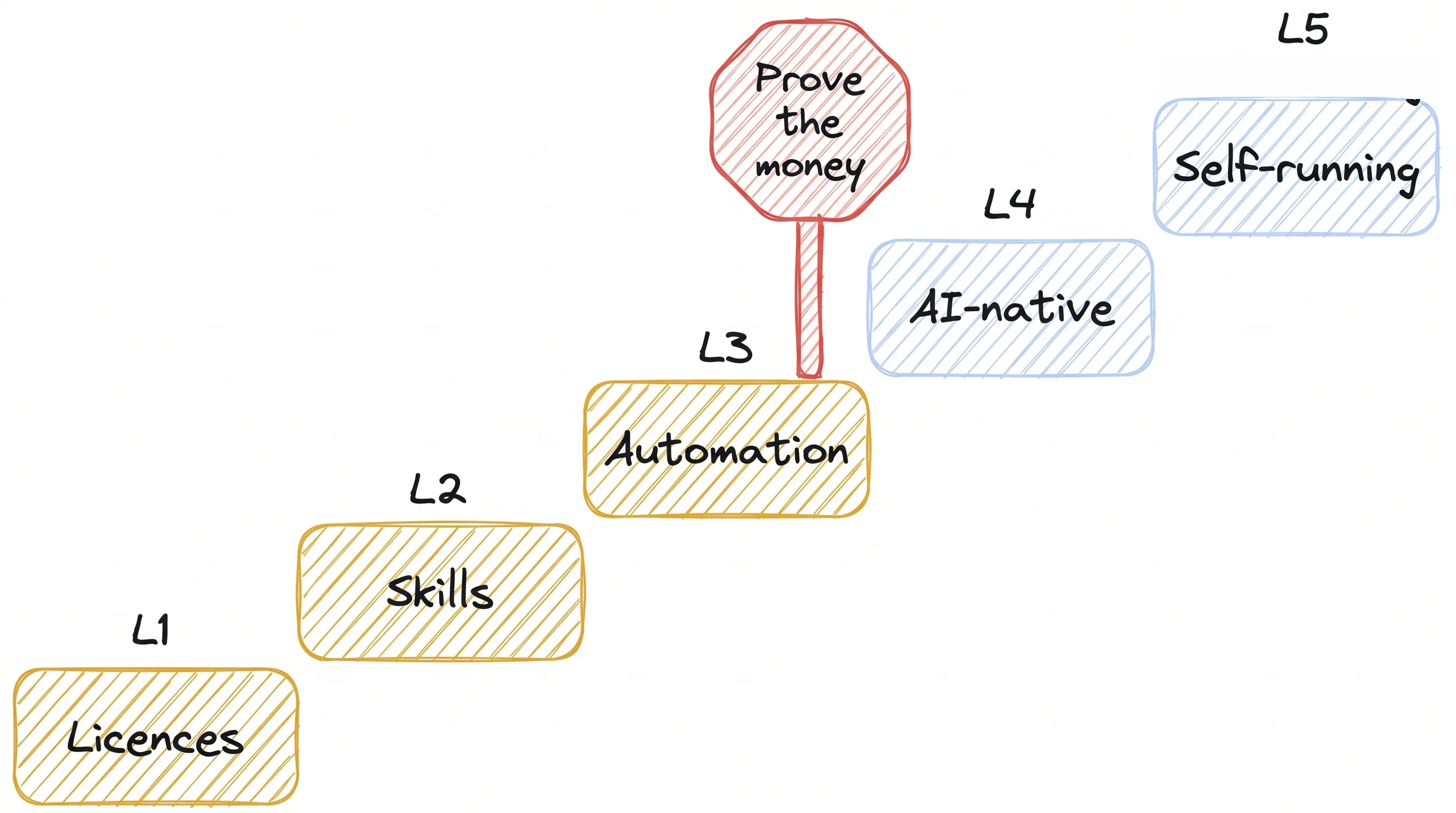
The second test is where the work lands. AI adoption tends to start in engineering, since the people able to build it work there. The money mostly lands elsewhere. In McKinsey’s State of AI survey, marketing and sales are where companies most often report revenue gains from AI. A CAIO who never gets past optimising developers is doing a CTO’s job with a different title. The seat earns its place once the work reaches the teams nearest the customer, and the AI transformation playbook walks through that move month by month.
IBM’s 2025 survey of more than 600 Chief AI Officers puts numbers on the seat. Of the 2,300+ organisations IBM contacted, 26% had a CAIO, up from 11% in 2023. Of those CAIOs, 61% controlled their organisation’s AI budget, and organisations with a CAIO reported 10% greater ROI on AI spend (IBM Institute for Business Value). The reporting line depends on the sample: IBM found 57% reporting to the CEO or to the board directly, while Equilar’s proxy data has 35% reporting directly to the CEO and 60% to another C-suite executive.
The people hiring for these seats are working it out at the same speed as the people taking them. Keep that in mind when an interview panel sounds certain.
If a CAIO or VP of AI offer is on your desk and you want a second read before you answer, that’s what Chief AI Officer coaching is for. Bring the offer, the org chart and your answers to the three questions above.
Titles around the AI mandate
- Head of AI: one funded team, and the roads into the seat
- Director of AI: the same mandate, one level down
- VP of Engineering vs CTO: the split the AI titles copy
- CTO: how the top technology seat shifts as the org grows
- AI program manager: delivery across models, data, evals and regulation
- When the board expects an AI answer and you own it