An AI engineering manager is a manager who runs three to five mostly agentic teams instead of one human team of eight. That is not what the title means today. Today it means an engineering manager who leads a team of human AI engineers, and Everpure is hiring exactly that in Prague right now.
Two jobs, one title. Worth separating before you plan a career around either.
I have run 3,662 1:1 leadership sessions with engineering leaders since 2019. The question that has changed most in the last four quarters is not “how do I use these tools”. It is quieter than that, and it usually arrives near the end of a session: what does my job look like in a year? Eleven people have asked me that exact question in the last four months.
The title already exists, and it means something else
Read the Everpure posting and the shape is familiar. Lead, mentor and grow a team of AI engineers and data scientists. Own the roadmap for AI initiatives. Drive the design and deployment of NLP and computer-vision models. Stay hands-on in the research.
That is an engineering manager with a domain specialisation. The people are people. The models are the product. Nothing in the posting mentions agents doing the work, span of control changing, or who decides what gets reviewed. It is the job as it has existed since about 2018, pointed at machine learning.
Call that the AI-domain manager. It is a real job, it is being hired for in this city, and it is not what this post is about.
The second meaning is structural. The teams stay ordinary product teams, and the work inside them becomes mostly agentic. The manager’s span in people barely moves while the throughput multiplies. That one has no job postings yet, which is exactly why it is worth reading about now rather than in a year.
Both are legitimate uses of the same three words. Only one of them changes what your job is.
The job is not disappearing. It is splitting.
The public argument runs in two directions and both are wrong. One says AI deletes the engineering manager, because smaller teams need less coordination. The other says nothing much changes, because leadership is human and empathy does not automate.
Ask an AI search engine today and you get the second answer, in soft focus. I put three versions of the question to ChatGPT with web search enabled on 3 September 2026. All three came back with the same reassurance: leadership, strategy and empathy are hard to automate, AI is an assistant. None of the three cited a single source. None described the role changing shape.
What none of those answers say: the work does not vanish, it divides. Two shapes stay funded. One does not.

Path A is the AI engineering manager, in the second sense
You go wide. Three to five teams instead of one, and most of the throughput on those teams is agentic. Your span in humans stays close to what it was, around eight, and a fleet arrives on top of it.
Note what this is not. You are not necessarily managing people who build AI, the way the Everpure role does. The teams can be shipping billing, or checkout, or internal tooling. What changed is how the work gets done inside them.
What the job optimises for changes underneath you. Coordinating people was the old bottleneck. The new one is review capacity. Agents produce more code than any team can responsibly read, so somebody has to decide what gets deep review, what gets sampled, and what gets trusted on reputation. That is a risk judgement, and it belongs to the person accountable for the blast radius.
Most orgs are making that call by default rather than by design. The manager who makes it deliberately, and can explain the policy to an auditor or a CTO, is doing something an agent cannot do and a peer usually has not thought about.
Path B is the staff AI engineer
You go back to the tools. No reports, a fleet under you, and the leverage comes from what you can direct rather than who you can align.
This is not a demotion and it is not a retreat, though it still gets read as one in orgs that only have a title ladder. The staff engineer role was already the answer for people who wanted scope without a headcount, and agents made the ceiling on that answer much higher. If the reason you took the management job was scope, this path now offers more of it than it did in 2023. If the reason was that management was the only promotion available, this is worth a serious look before the next cycle. The mechanics of that move have not changed, only the payoff.
The dead zone is one human team of eight
Here is the shape under pressure: the engineering manager of a single six to nine person human team, all humans, doing the job the way it was done in 2022.
Not because the person is bad at it. Because the shape stops justifying its own line in a budget conversation. When the teams below get more agentic, one manager covering one team looks like an org-design decision nobody has revisited, and the revisit tends to happen without the manager in the room.
Nobody calls a meeting to tell you your shape stopped being funded.
That is the uncomfortable part, and it is why this is worth thinking about in September rather than in the middle of a reorg.
How to tell which way you are already drifting
Most people are already moving toward one of the two paths without having chosen. The signals are concrete.
| AI engineering manager | Staff AI engineer | The dead zone | |
|---|---|---|---|
| Span | 3 to 5 teams, mostly agentic | No reports, a fleet | 1 team, 6 to 9 humans |
| What you optimise | Review policy and prioritisation across teams | Output and technical direction | Coordination inside one team |
| First thing that breaks | Review capacity | Isolation from org decisions | The budget conversation |
| Who funds it in 2027 | The org, as a scope role | The org, as a leverage role | Under review |
Read the row you spend most of your week in, not the one on your business card.
Three signals worth taking seriously:
- Your calendar. If most of it is one team’s coordination, you are in column three whatever your title says.
- The review question. If nobody has asked you what gets deep review versus sampled, that decision is being made by default, and it is the decision that defines path A.
- Your last scope change. If your span has not moved in two years while your team’s output has, the gap is being noticed somewhere above you.
The counter-argument, and why it is comfortable
The strongest opposing case is the resilience argument. Research.com’s guide to engineering management careers most resilient to AI makes it directly: critical thinking, judgement and people leadership stay difficult to replicate, so engineering management holds up well.
Two problems with leaning on that. The first is that the piece analyses architectural, civil and mechanical engineering management, not software teams, and it ranks for this query on keyword match rather than topical fit. The second matters more: “the profession survives” and “your headcount shape survives” are different claims. Both can be true at once. The profession is fine. The specific arrangement of one manager over one small human team is the part being repriced.
Comfort is what makes that argument popular. It asks nothing of you.
The conversation to have before someone has it about you
The practical move is small and it is a conversation, not a plan.
Ask your director one question: over the next four quarters, is my scope going wider across teams, or deeper into technical direction? Then say which one you want. Not which one you would accept.

Most people do not ask, because asking feels like inviting a decision. The decision is coming regardless. The difference is whether your preference is in the room when it happens. If you are a director already managing managers, the same question runs one layer down, for every manager reporting to you.
This post argues the decision. The companion piece argues the diagnosis: what agents are already doing to the manager job as it exists today. Read that one if you are not yet convinced anything has changed.
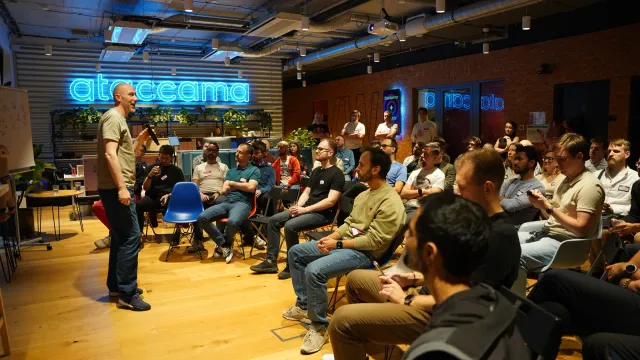
On 14 October in Prague, we take this fork into a room: ELC meetup #43 at Apify, The Standard Tech/Engineering Manager Role Is Dead. How You Survive 2027.
I also run this as a keynote and a hands-on workshop for engineering managers: AI Engineering Manager in 2027: How to Lead 30+ People With No Burnout.
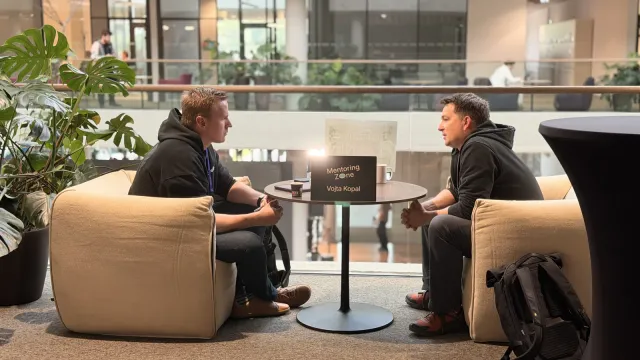
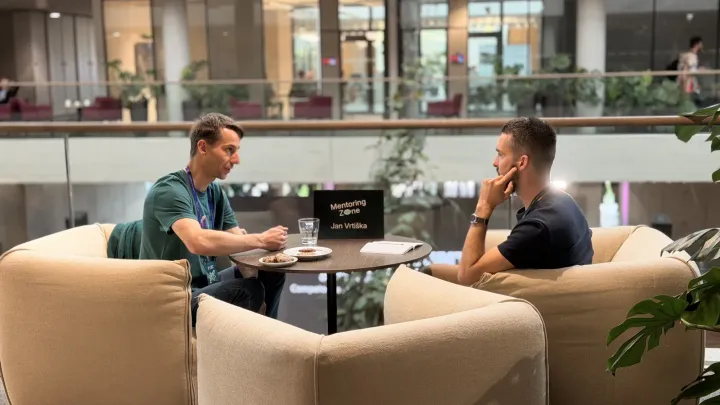
If you want to work out which fork is yours with someone who has watched a few hundred of these conversations, that is what a mentoring session is for.