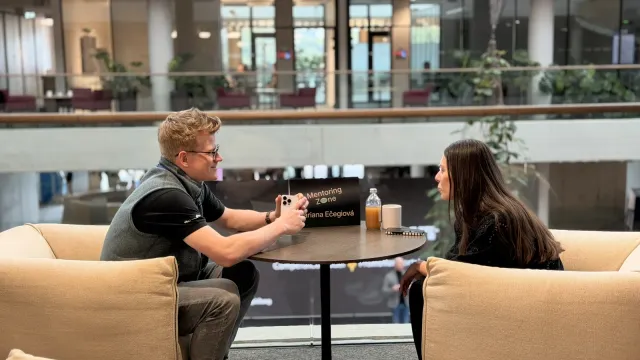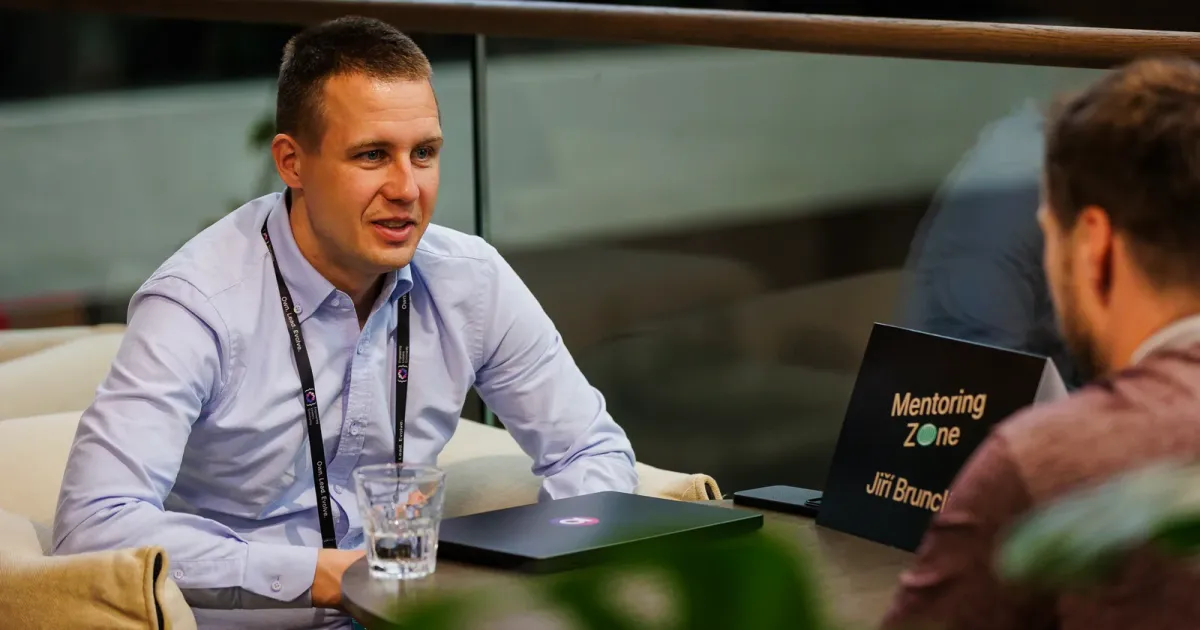
Manager as coach means you run your 1:1s by asking questions that let your engineer find the answer, as opposed to handing them yours. You still set the bar, make the final call and own delivery. What changes is who does the thinking in the room.
I’ve run 3,662 1:1 leadership sessions since 2019, with 317 engineering leaders, and the rule I give managers is the same one I follow there: teach people to own the problem. A manager who answers each question themselves becomes the bottleneck, and the team learns to bring them more questions.
Manager, mentor, coach: which hat, when
Being a coaching manager doesn’t mean you only ask questions. You switch hats inside one 1:1, and the skill is knowing which one the moment needs.
| Hat | Who talks most | Typical line | Wear it when |
|---|---|---|---|
| Manager as expert | You | ”Do it this way.” | Production is down, or the decision is yours to make |
| Manager as coach | Your engineer | ”What’s your proposal?” | They own the problem and can solve it with a nudge |
| Mentor | Both, with stories | ”When I had this, I tried…” | They face something new and you held that seat before |
| External coach | The client | ”What would a good outcome look like?” | Clarity, confidence or direction, away from the reporting line |
The difference between the last two rows is its own topic, I wrote it up in mentoring vs coaching. Harvard Business Review describes the same shift for companies as a whole: managers moving from command and control toward facilitating problem-solving by asking questions.
The 1:1 questions that grow an engineer
These come from the 1:1 playbook I give to new managers I mentor. The order matters: help first, growth in the middle, status last.
| Moment | Question | What the answer tells you |
|---|---|---|
| Opening | ”How can I help you?” | Whether they trust you with a problem. A status update here means the 1:1 turned into a review meeting |
| Focus | ”What’s the topmost thing you focus on?” | Too many answers: no scope. No answer: no alignment |
| Growth | ”How are you doing with your development plan?” | Progress, or a plan that hasn’t been opened since you wrote it |
| Goals | ”Where do you want to be in 6 to 24 months?” | The ambition you plan the next steps against |
| Obstacles | ”What might get in the way? How do we avoid it?” | The risk they already see and haven’t said |
| Support | ”Where do you want the most support from me?” | Where to spend your time with them |
| Feedback | ”What’s the best way to give you feedback?” | How to say the hard thing so it lands |
The goals, obstacles and support questions belong to the first four 1:1s with a new report, before any regular agenda. Few people answer “how are you doing” openly without trust, and those four sessions build it.
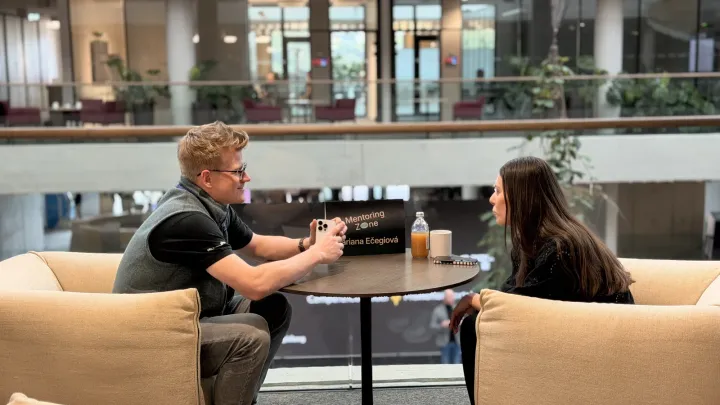
Feedback works the same way, specific and short. “I enjoyed seeing…” for a small win, “I was troubled to see…” for the opposite. Then a question back: what would they do differently?
Guide, don’t rescue: four questions before your answer
When an engineer brings you a problem, the coaching move is four questions before any answer:
- Have you talked to X? The person who owns the dependency, the API, the budget.
- Have you prepared Y? The data, the draft, the estimate.
- Have you thought about Z? The risk they skipped, without solving it for them.
- What’s your proposal? Before they ask you to decide.
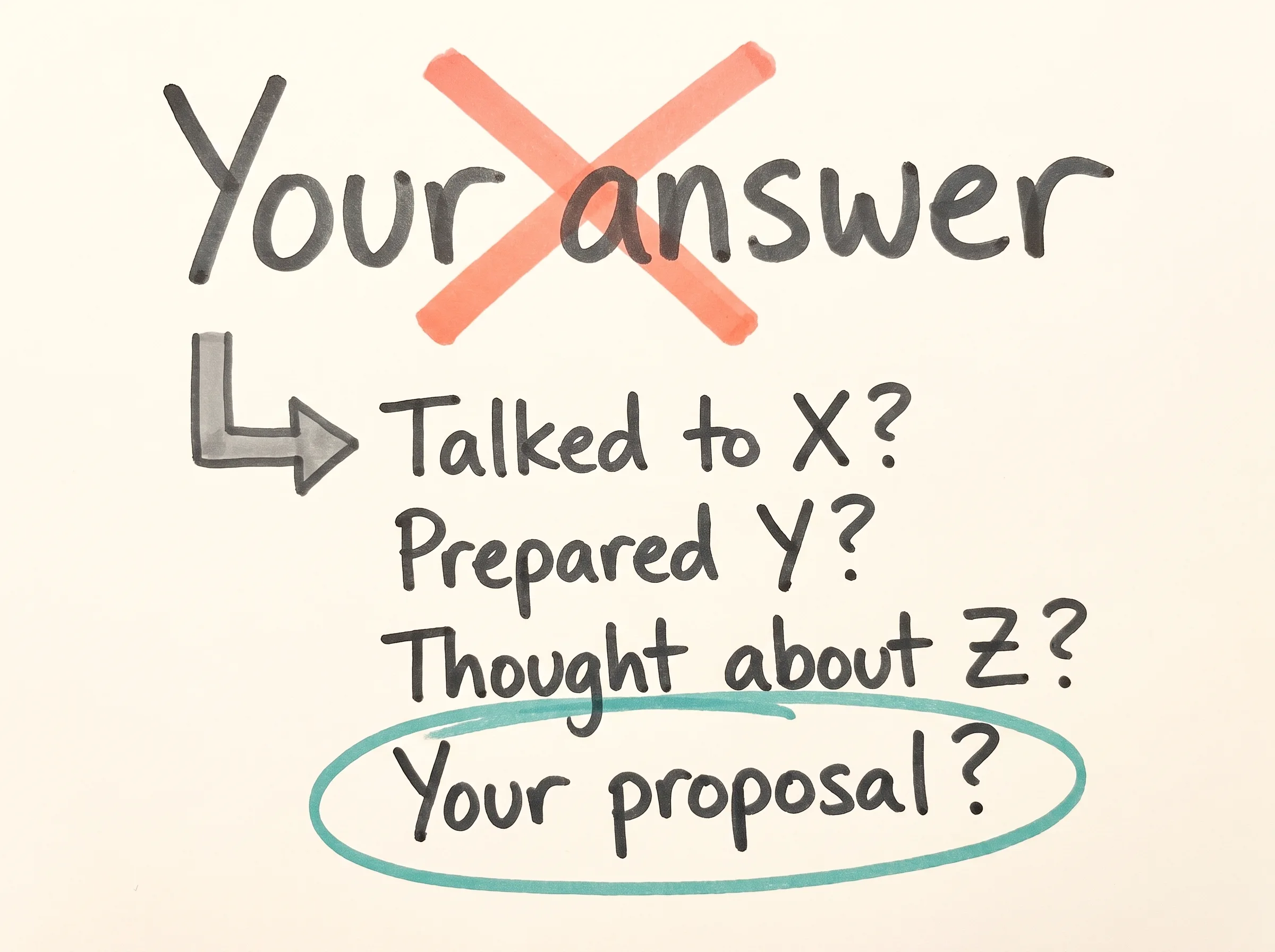
It feels slower, and for the first weeks it is. This is where first-time managers of managers usually get stuck: old teammates keep knocking on the door for answers or approval on almost every detail, which swallows around 40% of their time. An answer you give saves five minutes today and books the same question for next week. The four questions teach people to come with a proposal, which is what lets a team grow without you in every decision.
In practice, the fourth question does most of the work. If you keep only one, keep that one.
Questions to ask a mentor, or your own manager
Coaching runs both ways. The 1:1 belongs to the engineer, so in my playbook the engineer sends the invite and owns the agenda. If you’re on the other side of the table, bring questions too.
To your manager:
- “Can I take something off your plate?” The fastest way to more scope and a better 1:1.
- “Can we change the cadence or the agenda of our 1:1?” You’re allowed to ask, the 1:1 is yours.
- Before you pitch an idea, answer the three questions I ask anyone who pitches me: How does this help us? What’s the return? How much effort does it take versus what we get? More on that in how to get your manager to listen.
To a mentor:
- “Tell me about a situation like mine that you handled yourself.” A mentor who held the seat answers with a story and a date. One who didn’t, answers with a framework.
- “What would you push back on in my current plan?” If they agree with everything, you’re paying for applause.
- “When does this end?” A good mentor plans to make themselves unnecessary. More criteria in how to find a great mentor.

Looking for the full list of 1:1 questions, with a first-meeting set, skip-level questions and a template? Engineering Leaders Club keeps a free one-on-one meeting questions generator.
Want someone to practise the coaching questions on, before you ask them of your own team? That’s what my engineering manager mentoring is for. Mentees rate every session from 0 to 10 right after it, since 2024 the average is 9.79/10.