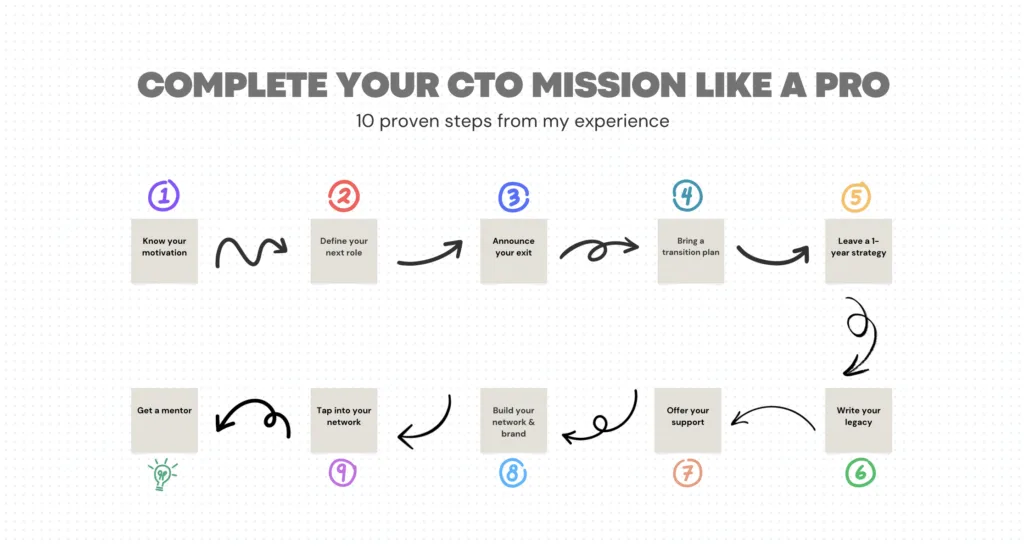
How you leave decides what you get offered next.
As a CTO, there comes a point when it’s time to move on, whether it’s your choice or the end of a mission you were hired for. Here’s how to finish strong and leave your current company with your professional legacy intact.
Where does this exit strategy come from? My own exits, plus mentoring engineering leaders across Central Europe through theirs, including leaders at some of the largest software companies in the Czech Republic.
 A list of selected clients from kamen.one
1. Know your motivation for change
Before anything else, take time to understand what you really want and expect from the change. Are you looking for growth and new challenges, or just trying to escape your current situation? Escape makes a lousy compass. Knowing your real motivation helps you land where you belong, and avoid where you don’t.
2. Define what you’re looking for next
Don’t let the market dictate your path. Knowing what you want before jumping into interviews will help you find the best fit for your goals and needs. Areas worth thinking through:
- Company size: Startup or scale-up?
- Company type: Product-focused or project-based?
- Language skills: Open to working internationally?
- Compensation: Have a clear idea of your ideal package (salary, bonuses, perks, stock options).
- Work preferences: Remote, on-site, or hybrid?
- Domain expertise: Fintech, AI, biometrics, e-commerce, etc.
3. Be upfront about your exit
Once you’re sure, set your exit date and communicate it early. If there’s no fixed timeline but you sense your mission is ending, give at least a year’s notice. A year sounds like a lot, and that’s the point: it’s direct, it’s professional, and everyone gets time to adjust. Leaving unexpectedly will damage your relationships, reputation, and references for future opportunities. Don’t burn bridges.
4. Bring a transition plan
If you leave the company in chaos, you’ll damage their future and your legacy.
Don’t just say you’re leaving, bring a game plan. Present a strategy outlining how the company can transition smoothly, including a high-potential replacement to carry on your work and key initiatives. Whether you find your successor or mentor someone internally, make sure you leave the company in good hands.
5. Leave a strategic roadmap
To leave your mark, offer a 1-year strategy with clear recommendations for ongoing and future projects, so your initiatives keep running long after you’re gone. This is what professionals do.
6. Write your mission statement
No mission story, no next step.
Stop launching new initiatives and shift your energy toward closing out your mission. Write down what you’ve achieved: a strong mission statement showing how you’ve moved the company forward.
Your story needs to be true, real, and lasting. It shouldn’t evaporate two weeks after you leave the company.” This will be your selling point for future roles.
Example mission statements:
“I scaled the business from $500K to $50M in three years, expanding tech and product capabilities.”
“I led the transition to a full cloud solution in 13 months, enabling 10x growth.”
“I shifted the company from sales-led to product-led in nine months, focusing on high-impact functionalities.”
“I grew the product from one country to a global offering with $50M annual revenue in three years.”
7. Offer your support after you’re gone
Extend your support as a mentor or advisor after you leave. It signals loyalty to the company’s success even in your absence, and it helps your successor take over. Cheap to offer, and it keeps the door open.
8. Delegate, build your network, & boost your brand
As you change over, start delegating responsibilities to free up time for expanding your network. Increase your visibility by tapping into conferences, panels, meetups, podcasts, or Slack channels.

One way to do this is by joining our Engineering Leaders Community of 1,000+ members. You’ll connect with other engineering leaders there, and active involvement in a community does more for your brand than any amount of posting from behind a screen.
 Our 21st Engineering Leaders meetup at Productboard
9. Use your network for new roles
Once your network is strong, start letting people know you’re available. This casual approach is more likely to lead you to meaningful opportunities than traditional job hunting or relying on headhunters or job boards. Your connections can link you to roles that truly align with your skills and goals.
10. Find a mentor
A mentor helps you make smarter decisions, boosts your market value, and opens doors you might not have noticed. Without one, you risk making avoidable mistakes, slowing your progress, or missing opportunities you never even heard about. Plus, a mentor can introduce you to their vast network of connections.

Curious about how my mentoring business and the Engineering Leaders Community evolved in 2024? Check out my journey and learnings here.
Bonus tip for interviews
Stand out from other candidates by suggesting an internal audit.
When interviewing for your next CTO role, don’t sugarcoat your mission. Offer to run an internal audit in your first three months to understand the company’s product strategy, business model, and operational efficiency. From there, propose a clear plan for achieving 10x improvements.
That’s the playbook. None of the ten steps is complicated; the hard part is running them while still doing the day job, which is exactly why so few CTOs bother. How far along is your own exit?