Consultants who overstay cost you money and momentum. Fire them now.
If your consultant is still around after a year, they’re costing you more than just money. They’re slowing you down.
Real consultants don’t stick around forever. They come in, solve problems, and get out. If you’re still paying them, it’s time to ask the hard question:
Is their presence making your company stronger or more dependent?
I’ve run my own consulting business for years, coaching engineering leaders to build capabilities that outlast my engagement. I know how easy it is for consultants to overstay their welcome and drain your resources.

Here are 11 no-BS ways to tell if your consultant is adding value or just feeding a costly dependency. Miss six or more? Fire them. No excuses.
How consulting dependency creeps in
There’s a quiet crisis in the consulting world.
Companies grow comfortable with consultants who never leave: agile coaches who become part of the headcount, external experts who slowly blend into the wallpaper.

This isn’t how it’s supposed to work.
Why long-term consultants deliver diminishing returns
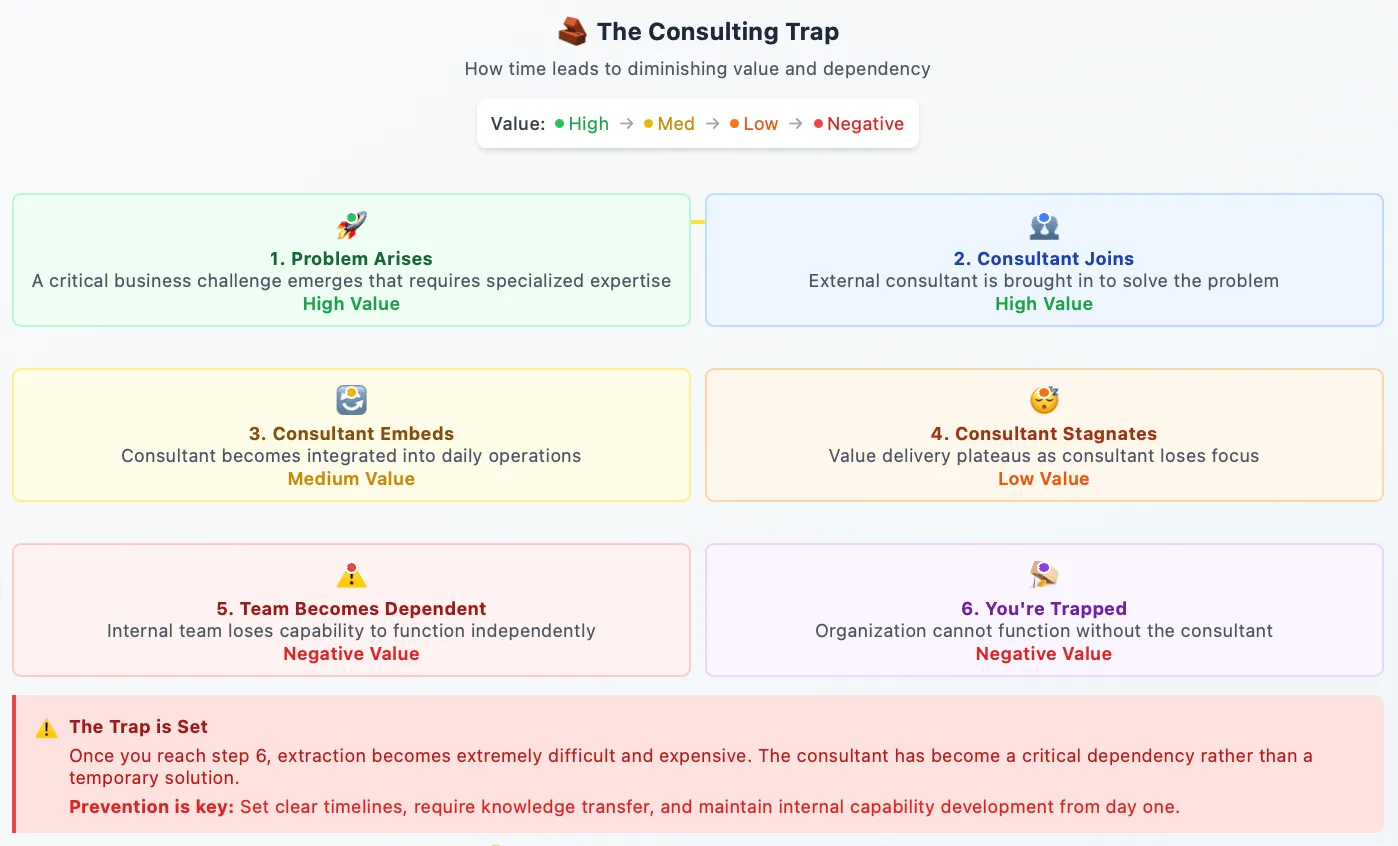
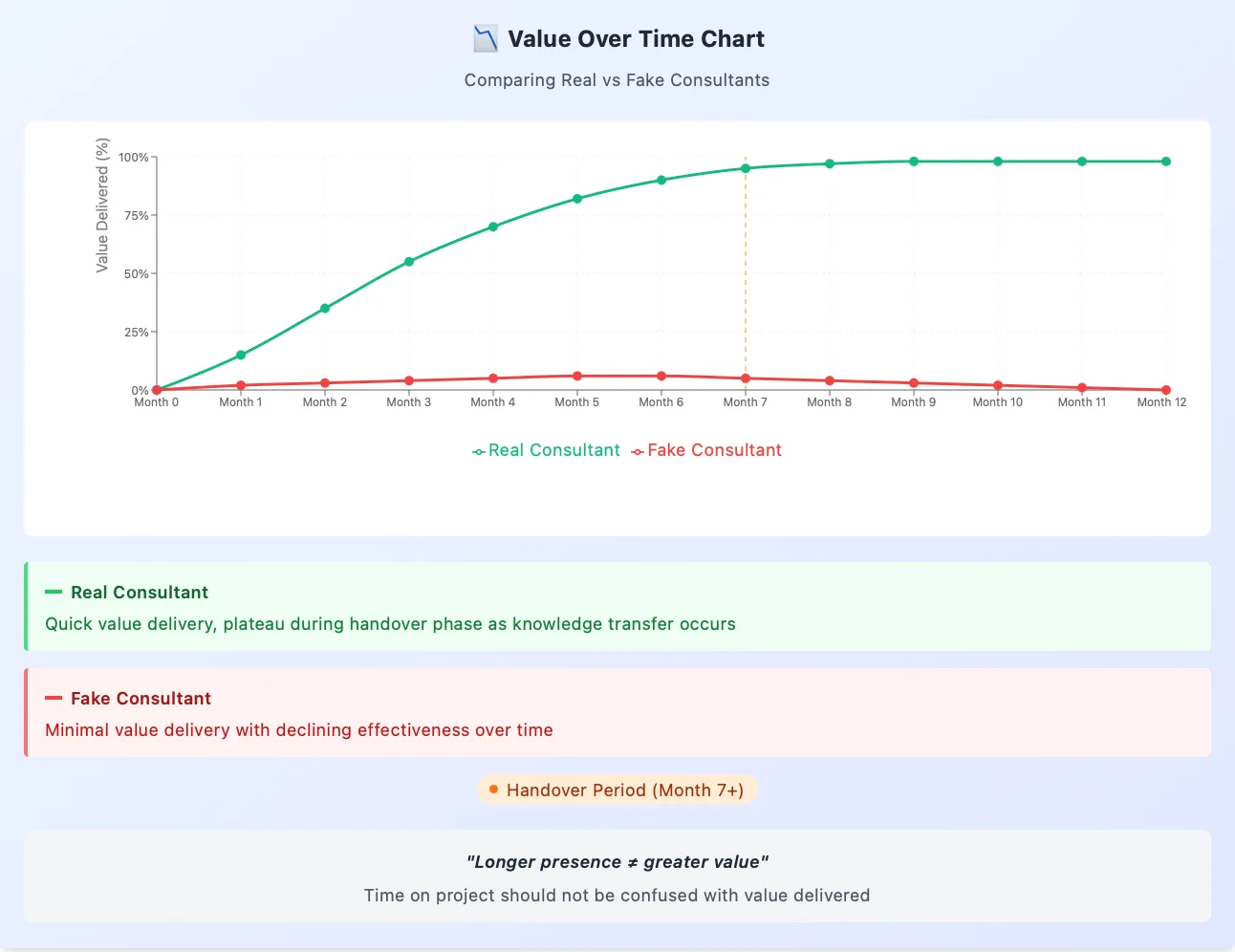
The longer they stay embedded in your team, the less value they bring.
Here’s why:
- Their motivation shifts from solving problems to staying billable.
- Their perspective dulls. They lose touch with other industries and ideas.
- Their presence creates dependence instead of capability.
Smart consultants don’t want to stay.
They move from company to company, deliver outcomes, and stay sharp.
They don’t linger for three years.
And if they do? You need to ask why, and what that says about both of you.
Measure before you fire
Here’s how to tell if your consultant is a value creator or a money pit:
- They talk ROI. You know how much value they’ll generate, as opposed to what they cost per day. If they can’t answer that question, you have your first red flag before the engagement even starts.
- They define success upfront. Measurable, time-bound, and written into the contract.
- They plan their own exit. Real consultants build adoption plans from day one. In practice, the good ones bring up the handover before you do, because a finished engagement is their best reference.
- They teach, live. Open workshops, whiteboarding, pairing with your leads. Dropping a PDF full of buzzwords doesn’t count as teaching.
- They don’t sell certifications. If every second conversation steers toward their paid training and badge program, you’ve stopped being a client and become a distribution channel.
- They help beyond your org. Through communities, lectures, blog posts, and podcasts.
- They strengthen your hiring. They help you find the right talent through their network.
- They partner with universities. Real experts nurture future ones.
- They publish regularly. At least once a month. A consultant who hasn’t published anything in a year has stopped learning, and you’re the one paying for the stale knowledge.
- They limit themselves to ~2 days/week. Because full-time = stagnation, for them and for you.
- They’ve built their own businesses. You’re not their first transformation story, or their only one.
Now flip it: every point they don’t meet is a red flag.
🔴 Missing 6+: Fire them. No excuses. You’re being drained.
🟠 Missing 2 to 5: Reframe the collaboration. You’re in the danger zone.
🟢 Missing just 1: Raise it. The good ones will fix it.
Dependency isn’t progress
If a consultant’s presence isn’t leading to competence within your organization, all you’ve bought is outsourced responsibility.
And over time, that will slow you down.
If your process still needs a permanent coach, or your strategy a full-time guide, something is broken, and the consultant has zero incentive to point at it.
A good consultant sets you up to grow on your own, and then leaves.
No contract means no control
Start with this question:
“ Show me the contract.”
Then ask:
- What’s the definition of success?
- What’s the timeline for adoption?
- What’s the handover plan?
If the answers aren’t clear, measurable, and time-bound, you’re running a risk. And the longer you wait, the more expensive that risk becomes.
Bottom line: Consulting ends with independence
Consultants should help you build muscle, not carry you.
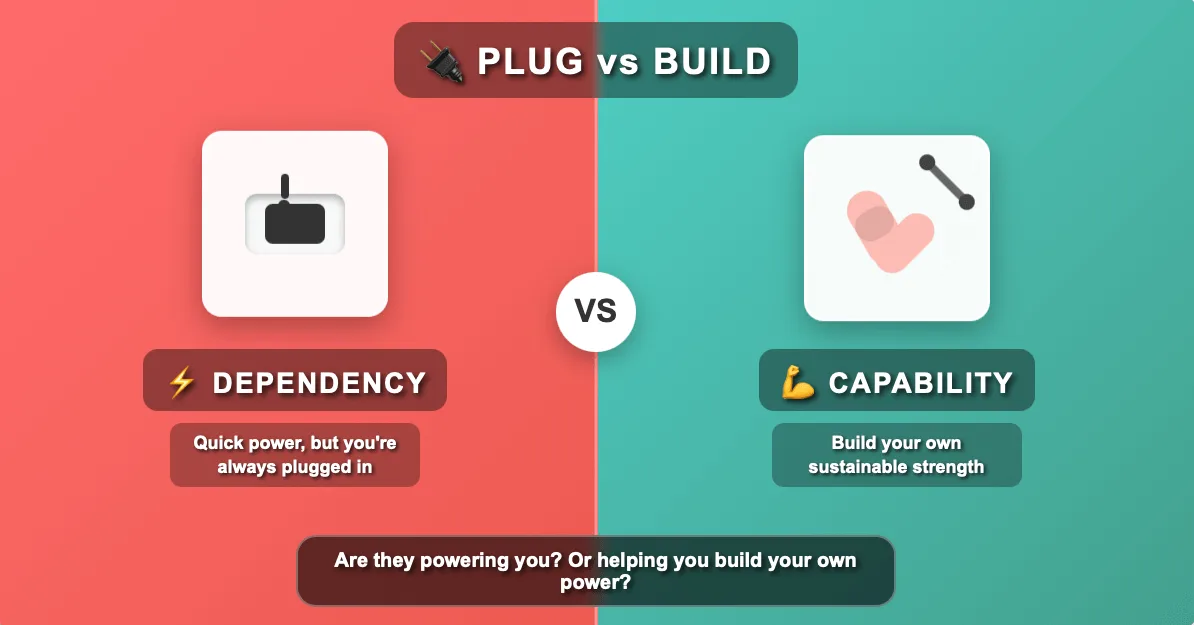
If your consultant is still around after a year, it’s time to reflect:
Have they made your team stronger? Or just more reliant on them?
Need help writing better consulting contracts or exiting current dependencies?
Let’s talk. I’ll show you how to structure engagements around outcomes, with an exit date written into the contract.