
Achieving €300,000 revenue with my Central European Software Engineering Leadership venture.
Year one data (July 2022 → July 2023)
Mentoring
- Volume: 317 billed sessions across 26 mentees from 16 companies or individuals.
- Funding: 19% self-funded, 81% company-funded.
- Global reach: 64% Czech Republic, 12% US, 12% Slovakia, 6% UK, 3% Poland, 3% Israel.
- Conversion: 76% post-intro client conversion rate.
- Feedback: 9.03/10 average since I started collecting formal ratings in Jan 2023.
- Composition: 52% debutant Engineering Managers, 19% mid-level managers, 29% CTO/CPO ranks.
- Remote: 93% online via video.
- Avg engagement duration: 7.3 months.
- Inbound funnel: 74% word-of-mouth, 17% social media, 9% website.
Advisory (fractional CTO / audit)
- Volume: 79 days billed across 3 firms.
- Scope: engineering metrics, internal audits, due diligence, structural shifts, career frameworks, agility.
- Rate: €1,550-2,100/day excl. VAT.
- Funnel: 100% word-of-mouth.
Phase 0: Pre-launch
My last full-time role was VPE at Mews, where I helped the company survive Covid, stabilise R&D, and grow engineering from 8 to 80 teams. I built a new team every month in the last year while keeping quarterly roadmap delivery over 80%.
We turned engineering into a differentiator. Mews reached Series C on that engine.
Under the surface, I’m an introverted person deep in my mind. I push myself to polish how I talk and listen. The 16personalities test flagged me as “Doctor / Defender” (ISFJ), which pointed me at my niche. I feel best when I’m helping or earning the trust of the people around me.
I have a Computer Science degree from MFF UK: my bridge to tech experts and math-brain CTOs. I get the tech world because I was that geeky coder for 14 years before turning to leadership.

The most precious career investment I’ve preserved for two decades is a strong learning routine. 4-8 hours a week, curated sources, purely technical for the first 14 years, progressively shifting to leadership as time went by.
Phase 1: Fuelling
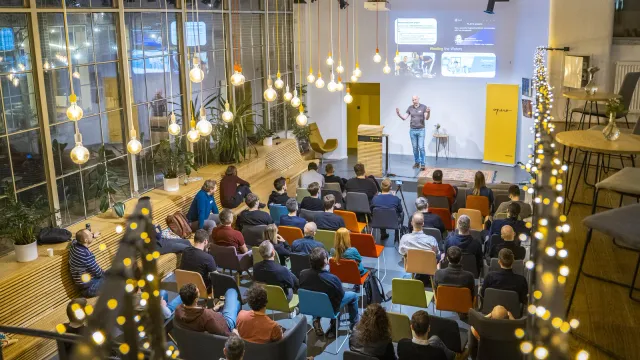
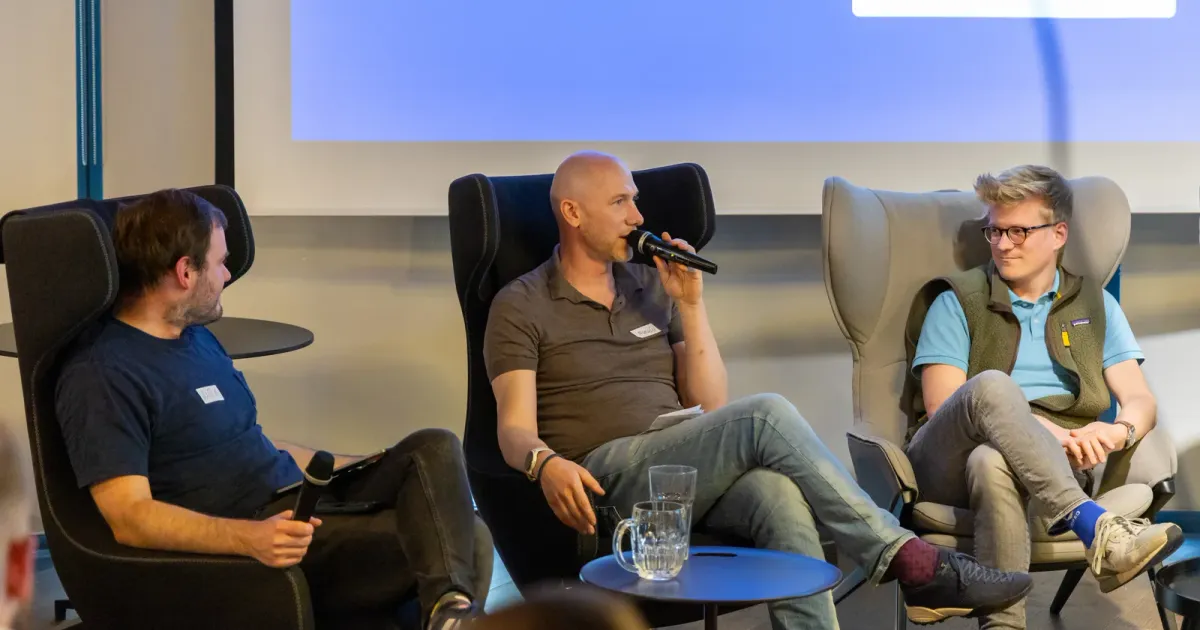
April 2021: I relaunched the Czech Engineering Leadership meetup I had started in 2019: private, small, invited only people with something unique to add. Even virtual, the connections became strong.
Then I stepped out of the introverted comfort zone: I started blogging about leadership on the Mews tech site. My first post (“Building Trust with Engineering Teams”) took 11 evenings. Writing became my canvas and my weapon. It untangled thoughts I didn’t know I had.
Phase 2: System check
Back in 2021, my ex-boss Honza Široký planted the seed: try mentoring at PlatoHQ. I did, for two years. Alongside, I facilitated PlatoHQ circles with 12 people at a time.
The more engineering teams I led, the more urge I felt to support my line managers. I set up an internal New Team Lead Growth Programme: a three-month structured foundation for new managers. I didn’t want to wait two years to find out who would thrive and who would struggle, especially while hiring aggressively and guaranteeing 80%+ quarterly delivery.
Phase 3: Ignition
The aha moment: when PlatoHQ changed its compensation policy to zero and I decided to leave, one of my mentees said he wanted to keep going, and pay for it.
Seven weeks later I had three more clients from my close network. My heart raced the day I got my first payment.
By mid-2022 things got tricky. Day job + evening coaching. I saw the worry in my wife’s eyes. I was a millimetre from burnout. I had to choose.
The defining moment
June 2022:
- Current job: I loved my VPE role at Mews.
- Side gig: four billable clients in the evenings. Inside I felt the pull to build my own venture as a 6-month experiment.
- New offer: to validate market value, I ended up with an offer of ~€230k/y compensation package (salary + bonus + stocks) for a full-time division lead role in Czech Republic.
Half my family said stay on the regular-job trajectory: the war, cost-of-living crisis, uncertainty. They were brilliant at constructing reasons not to start. The other half was supportive.
Meanwhile I researched hard. I saw the scene: people who got famous for a single topic, people relentlessly active on social, people refurbishing others’ content, people selling books or certificates.
From my learning habit, I saw:
- how Gergely’s Pragmatic Engineer newsletter had traction,
- how sharp and inspirational Will Larson’s Irrational Exuberance was,
- how tight Jade Rubick’s weekly newsletter courses were,
- how spot-on John Cutler’s Beautiful Mess scenarios were,
Together, these signalled there IS a way to build a solo venture on unique perspectives with a balanced (not manic) social presence. Close to my nature.
The click
One Saturday morning, listening to a podcast by Ondrej Kobersky about stock investment: he explained why timing the market is a poor idea. Compare that to consistent investment through good and bad years: the consistent approach wins.
It clicked with my venture situation of waiting to gain a competitive advantage instead of persisting to invest regularly despite unfavourable indications. Iterative discovery.
I made my lifetime decision in a second: I turned down the €230k role and gave notice.
Y1 lessons: what worked
- Niche beats breadth. “Engineering leadership mentoring, CEE roots, EN/CZ/SK” was specific enough for word-of-mouth to work.
- Word-of-mouth is the funnel. 74% of paid mentees came from previous mentees or ex-colleagues. Building a real community (ELC meetups) fed this.
- Free intro calls, no upfront payments. Removed all buying friction. If we’re not a fit, no money changes hands.
- Feedback score at every session. From Jan 2023 I asked for a 1-10 rating after every session. The 9.03 average IS the sales pitch.
- Write. Consistently. Blog posts + LinkedIn built the top-of-funnel that word-of-mouth couldn’t cover.
- The advisory revenue paid the rent. 79 days × €1,550-2,100 kept the cash flow steady while mentoring compounded slowly.
- Don’t wait to feel ready. Iterative discovery beats timing the market. Every time.
What I’d do differently
- Start writing 2 years earlier. The compounding effect on inbound funnel is enormous. Every post is an asset that keeps working.
- Invest in the meetup community faster. ELC is now the most valuable long-term asset. I could have built it earlier.
- Say no more. In year one I said yes to almost every intro call. Half of them weren’t fit. I burned time I should have spent on writing or product.
- Price higher, sooner. I started at €150/hr and grew to €300+. Should have started at €300.
If you’re considering a similar move: don’t romanticise it, but don’t wait either. The market will not signal “now”. You have to invest through the uncertainty. And if you want to talk through your specific situation, book a free 30-min intro. No sales pitch.