10 no-BS steps to launch a mentoring business that drives growth, trust, and results.
 From a 6-month experiment to 4 years of growth, 161+ mentees, 1000+ sessions, and $200k/year
Over the last six months, nine different people asked me the same thing:
“How do I provide a great mentoring experience?”
Usually, it’s one of two types of people:
- Leaders who want to launch internal mentoring in their company.
- People testing the waters as consultants.
I get it. Starting mentoring was a pain in the ass for me too. No playbook. No deep knowledge. Just a lot of hope. And since I’m a software engineer by background (and an introvert), it was hell.
So I ran a 6-month free experiment mentoring EMs, Directors, and CTOs.
Fast forward 4 years → I’ve mentored 161 people, run 1000+ sessions, and built a 200k/year mentoring business working just 2 days a week.
This is the exact playbook I wish I had when I started. Consider it your ammo to launch mentoring in your company (or your side business) and not waste years figuring it out on your own.
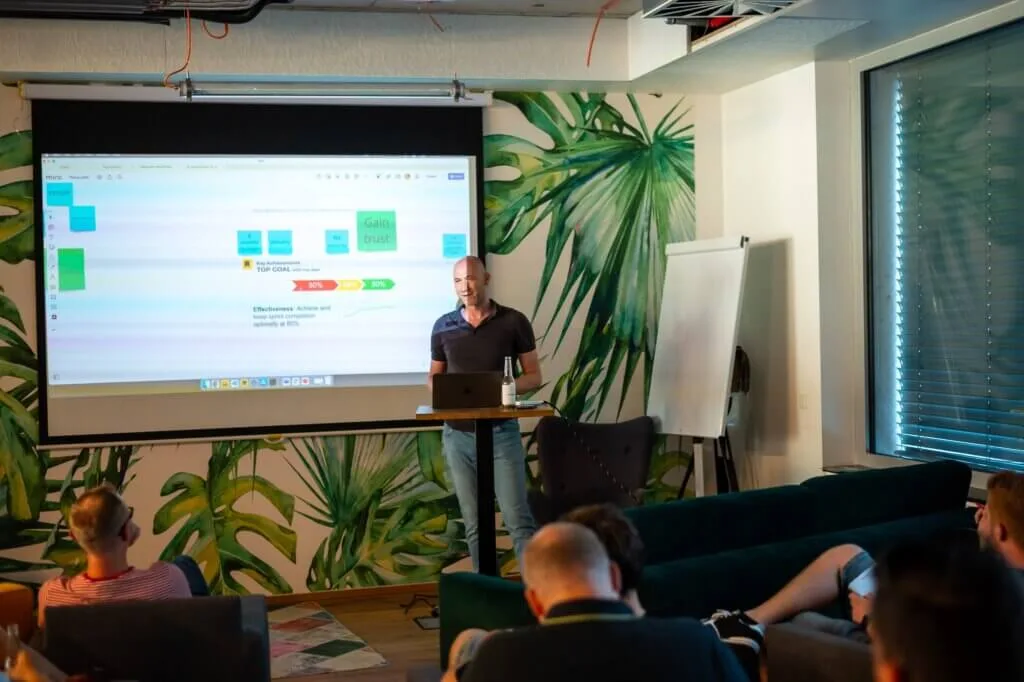
 At ELC 2025 leading my workshop ‘From Manager to Mentor: How to Start and Succeed in Mentorship’
1. Own your niche
Generic life coaches are everywhere. Nobody cares.
I mentor software engineering leaders because that’s my world. I know the problems, the language, the pain. That’s why people trust me.
No niche = no point.
2. Live by two principles
- Transparency. Call the shitty situation what it is. No sugarcoating. That’s why I curse a lot in my sessions, to cut through the politeness and get to the truth.
- Privacy. What’s said in mentoring stays there, whether it’s business, health, or family.
Without these two, there’s no trust. Without trust, you’re just another consultant.
3. Combine mentoring and coaching
That’s consultant bullshit. Nobody works like that in reality. You need both.

If someone comes to you with an urgent issue (new CTO, reorg, AI tooling, new competency framework), they don’t have six sessions to “self-discover” the answer. They need options today. You give them 2 to 3 solutions, pick one together, and they execute.
That’s mentoring. And it builds trust fast.
Because in tech, nobody respects people who talk theory without getting their hands dirty.
Coaching comes later, once you’ve cleared their firefighting mess and created headspace for reflection.
4. turn interest into mentees
- I send them to my mentoring page → saves repeating the basics.
- Do a 30-min intro coffee. Test chemistry, rules, and motivation.
- Already give them a taste of your value in that meeting.
- If it clicks → recurring calendar invite.
5. Launch with a first-session x-ray
Don’t start mentoring right away. Spend ~45 minutes dissecting:
- Motivation for mentoring
- 2 goals (1 business, 1 personal)
- Top achievement so far
- Company background + personal background
Then write down those 2 north stars. Without them, you’ll scatter across random leadership topics and help them “a bit” with everything, which means no real progress.
6. Define rules of engagement
If homework completion drops below 65 to 70%, I drop the mentee. Simple. I want proof my time leads to real results.
Every session ends with 30 min of homework. No action = no progress = waste of time.
7. Keep a bi-weekly Rhythm
- Biweekly works best.
- Weekly = too much, mentees drown in FOMO tasks.
- Monthly = too little, no relationship, no momentum.
8. Charge fairly
Monthly invoice. No upfront half-year prepayment needed (unless a company prefers it for budgeting).
9. Build your library of hot topics
80% of mentoring is repeatable. The same themes show up again and again (1:1s, calendar chaos, trust building, promotions). Document them. Share them. That’s how mentees see you “get it” immediately.

This is where my Mentoring Triangle of Strength comes in: a structured system of Learning, Mentoring, and Advisory that makes sessions repeatable, high-impact, and scalable.
10. Avoid hierarchy conflicts
Never mentor someone in your hierarchy chain. If you’re their manager, you’re not their mentor. Period.
Lessons learned
- Self-funded mentees grow fastest. When people pay from their own pocket, they’re hungry for ROI. They usually outgrow their managers, which is sweet revenge when the manager “couldn’t find budget” for them.
- You need ammo. 80% of problems repeat, so prepare frameworks, templates, and questions in advance.
- Sometimes you won’t know the answer. That’s fine. Draw the problem out together. Nine times out of ten, clarity comes through the conversation itself.
Check out: “ Earn Six Figures in 6 Months: Your Guide to Landing 30+ Clients and Growing Your Business” to learn how to acquire clients and scale your mentoring business.
 Mentoring financial results from August 2023 to 2025, full data at www.kamensitak.com
Why I mentor
As a software engineer, I loved the instant gratification of shipping to production. Leadership doesn’t give you that. Mentoring does. But instead of one piece of chocolate, you get the whole bar: watching someone grow, get promoted, or outpace their own manager. That’s why I’m addicted.



Building the next generation of tech leaders one mentee at a time.
If you want to build a mentoring business that lasts, mentor like people’s careers depend on it. Because they do.
For a bigger-picture look at how I’m turning mentoring into a structured ecosystem for tech leaders in Central Europe, see my 2025 Entrepreneur Strategy.
Start mentoring that works
👉 If you want to experience mentoring that works, not 6 months of vague “self-discovery,” check out my mentoring page.
Or DM me, and let’s skip 4 years so you can get promoted (and fairly paid) faster.